After Class 3
Christopher Pinney's Photography and Anthropology
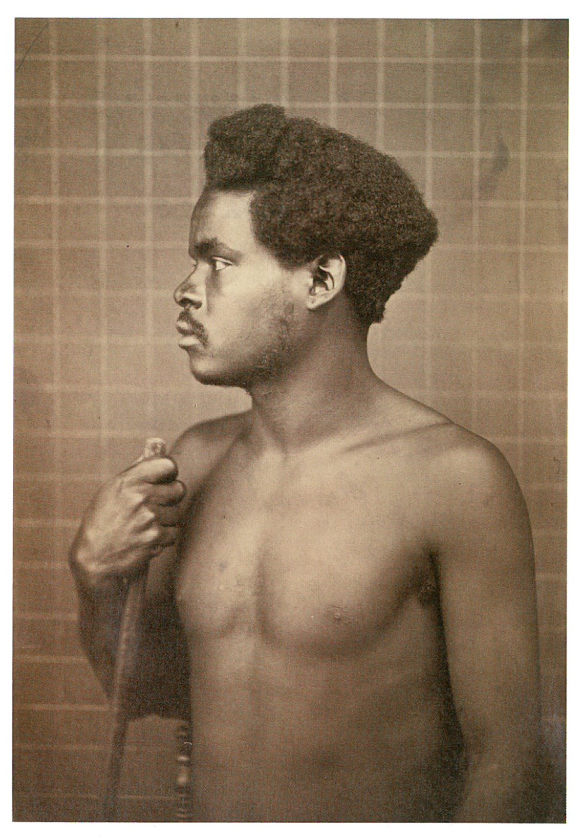
Today’s class was on the first chapter of Christopher Pinney’s book Photography and Anthropology (2011). The chapter deals with the doubled history of these two ideas/practices, and Pinney does a good job of situating the formal qualities of photography as part of the disciplinary mechanisms of early anthropology.
We started by talking about the overall point: how do we describe the importance of photography for anthropology and vice versa, which is another way of saying: how do we know what we know about the information anthropology supplies by way of documentary, in this case, visual evidence? The answer Pinney provides takes us through two general phases of anthropological study.
The first (by way of Tyler) shows how the oral testimony of Indigenous informants was viewed in early anthropology as suspect, with Indians prone to subterfuge and deception (lol). This period sees a reliance on the transformation of the body into useable data—the Indigenous body becomes photographed only insofar as it is useful to the Anthropologist, working in a colonial metropole, for later study and theorization. This is the moment in which Lamprey develops his grid.
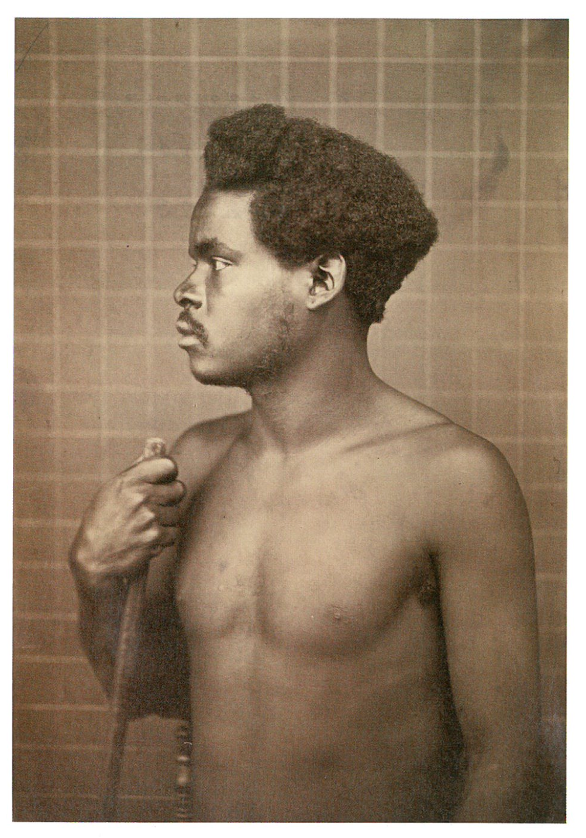
(Unknown photographer, “the Dialect of the Academy Figure,” Madagascan man photographed against a “Lamprey grid,” c. 1870s, albumen print. cited on p. 27)
And also when the monogenetic origins of mankind (which had to be true for the Bible to be true), led people like Carl Dammann to compile his album “Races of Men” in 1876.
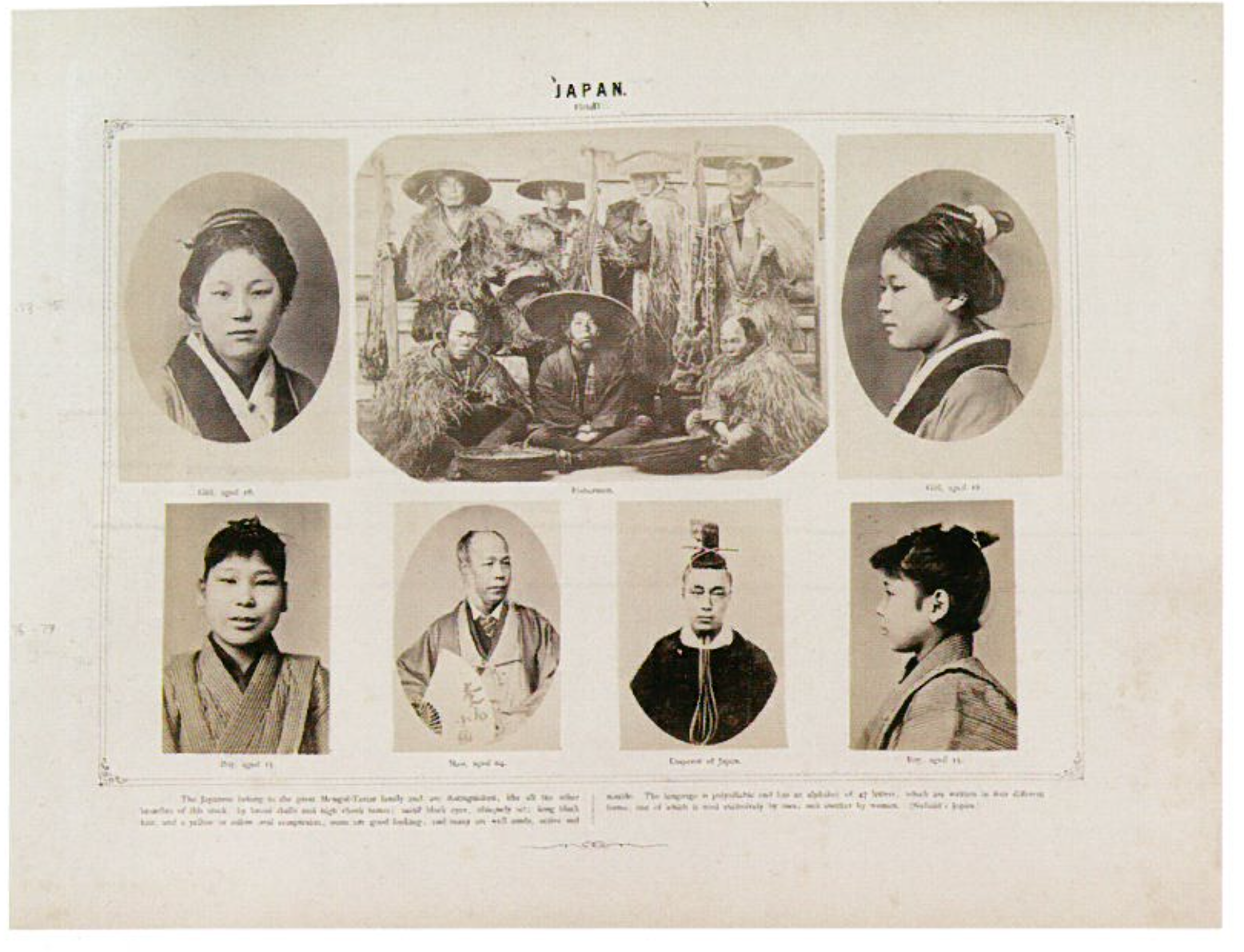
(Carl and F.W. Dammann, “Japan” plate XI from Various Races of Men (1876) albumen prints, cited on p. 30).
This first period is fairly comprehensible. It is through the synecdoche of the type that this photographic technique makes sense in the broader inquiry into the history of mankind, and the origin of human difference. But, and here is where my students were perspicacious, the sample size is so small, how can this be representative of an entire “race” of people? Indeed.
The second phase, in the 1890s, sees anthropologists taking photographs not of still subjects against a Lamprey grid, but in the action of “doing” culture.
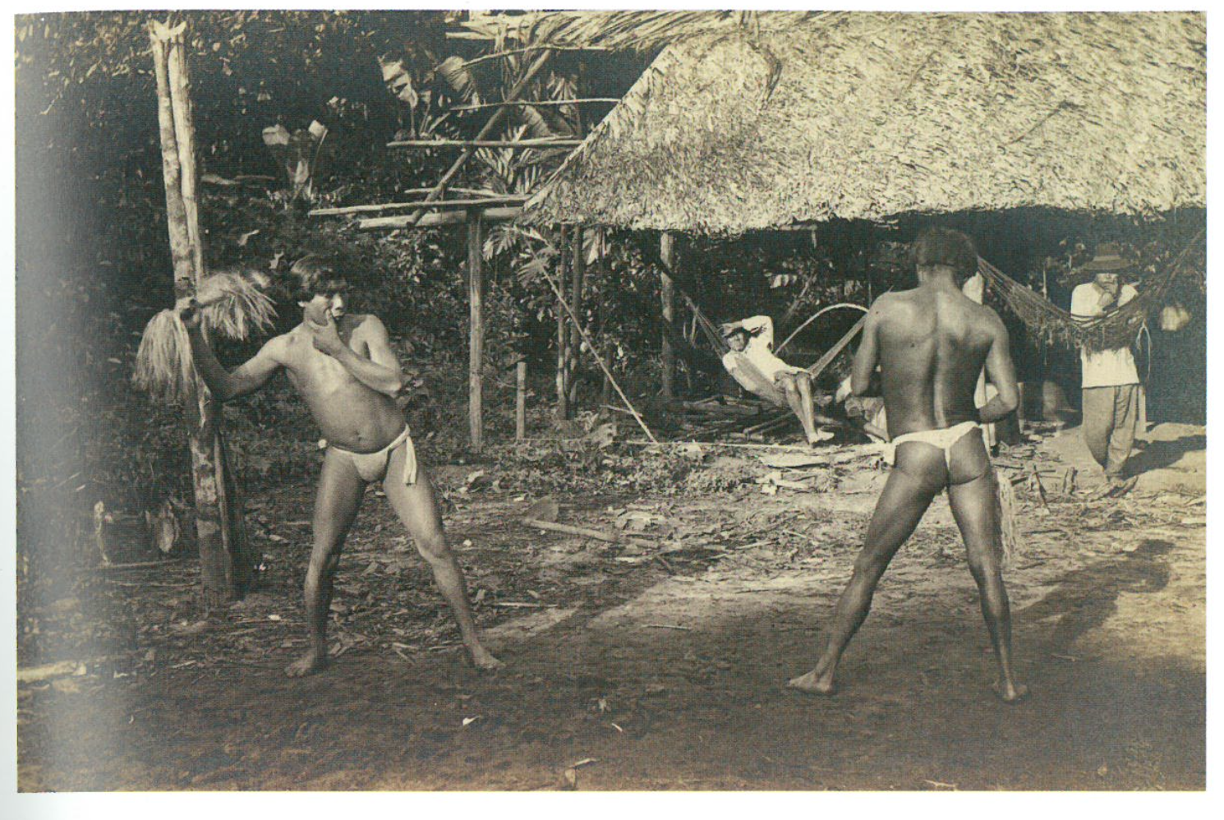
(Everard im Thurn, Arawak Whip Game, c. 1884, cited on p. 36).
This is the period when the anthropologist begins to consider the photograph as a tool for recording culture, rather than just bodies-as-data. The relations of power are still there, of course, but the information drawn from the photographs is less anthropometric, and more cultural. This is one of the early examples of what we might consider the photography of field work, which Pinney goes on to describe as reaching its apex with Bronislaw Malinowski.
We spent a good bit of time talking about Malinowski, his diaries, of which Pinney cites a few examples, and some of the photographs of himself in Papua New Guinea. I won’t repeat it here, but the famous photograph of Malinowski standing in front of a Trobriand man in a wig, became a point of contention about what precisely we know about people by way of anthropological studies like his.
I think we were able to round out the discussion with the question of how are we still in the orbit of this anthropology. What we know about culture, or what we think we know, is very much a product of this regime. What we know about human difference, or, again, what we think we know, and of the development of “civilizations” is certainly also a product of this era. The shadow cast by such figures is long. And we are definitively still in it.
I’m giving a presentation tomorrow, in fact, at the College Art Association, in which I’m going to try to provide an alternative way of reading these ethnographic photographs, one not circumscribed to the colonial circuits of intelligibility, of the body-as-data, but rather the body-as-relative. I’m glad to have had the opportunity to revisit this history as it reminds me that I’m very much doing work that matters.