An Indian Smiling

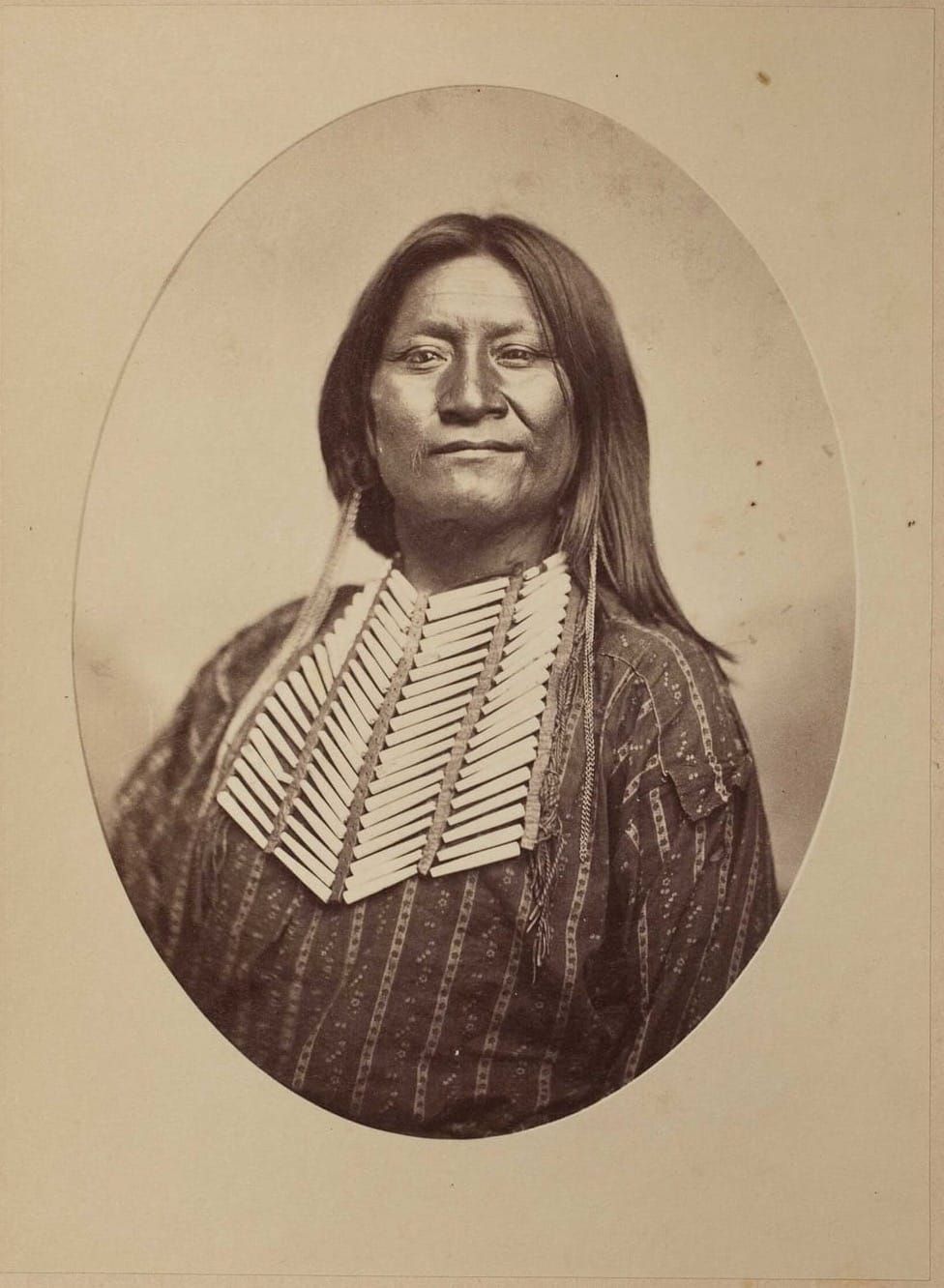
I'm starting a new series called "NDN smiles". It's going to last four to six weeks and mostly rely on archival photographs such as this one that are housed in digital collections--here from the Newberry Library.
I have been mulling this one over for a little while, trying to figure out the types of questions I want to be asking--of myself, of others--in the era of...what do we call this? colonial melt-down? recalcitrant apocalypse? whatever this era is, I think it needs NDN smiles.
I don't think we need my thoughts on right-wing delusions of an imperial return to greatness. I already know, and you already know, that such delusions are killing people, and will continue to kill people because the United States is a settler colony and its function is to dispossess and kill. That is my starting point.
But it isn't my end point. Rather, I have been thinking about how we survive. How Indigenous Peoples and individuals have survived and thrived and resisted and refused the onslaught of colonialism for centuries, and continue to do so. Sometimes it is with war. Other times it is accommodation--coerced or otherwise--of the settler regime. Sometimes it is hiding and regrouping, or refusing and removing oneself from the scene.
I have been thinking about smiles as a gesture of resistance.
When is a smile a refusal to acquiesce to colonial norms? When is a smile an intimate, deliberate, delicate method of holding back what one knows, while letting others know, because surely they are watching our smiles, that we are aware when they think we are oblivious.
"A smile is a knowing gesture," I wrote in Speculative Relations. I was writing there about a man smiling while reading a newspaper, smiling and knowing that he was being photographed as lacking knowledge. And yet, a knowing smile. An understanding of the situation, a subversive gesture.
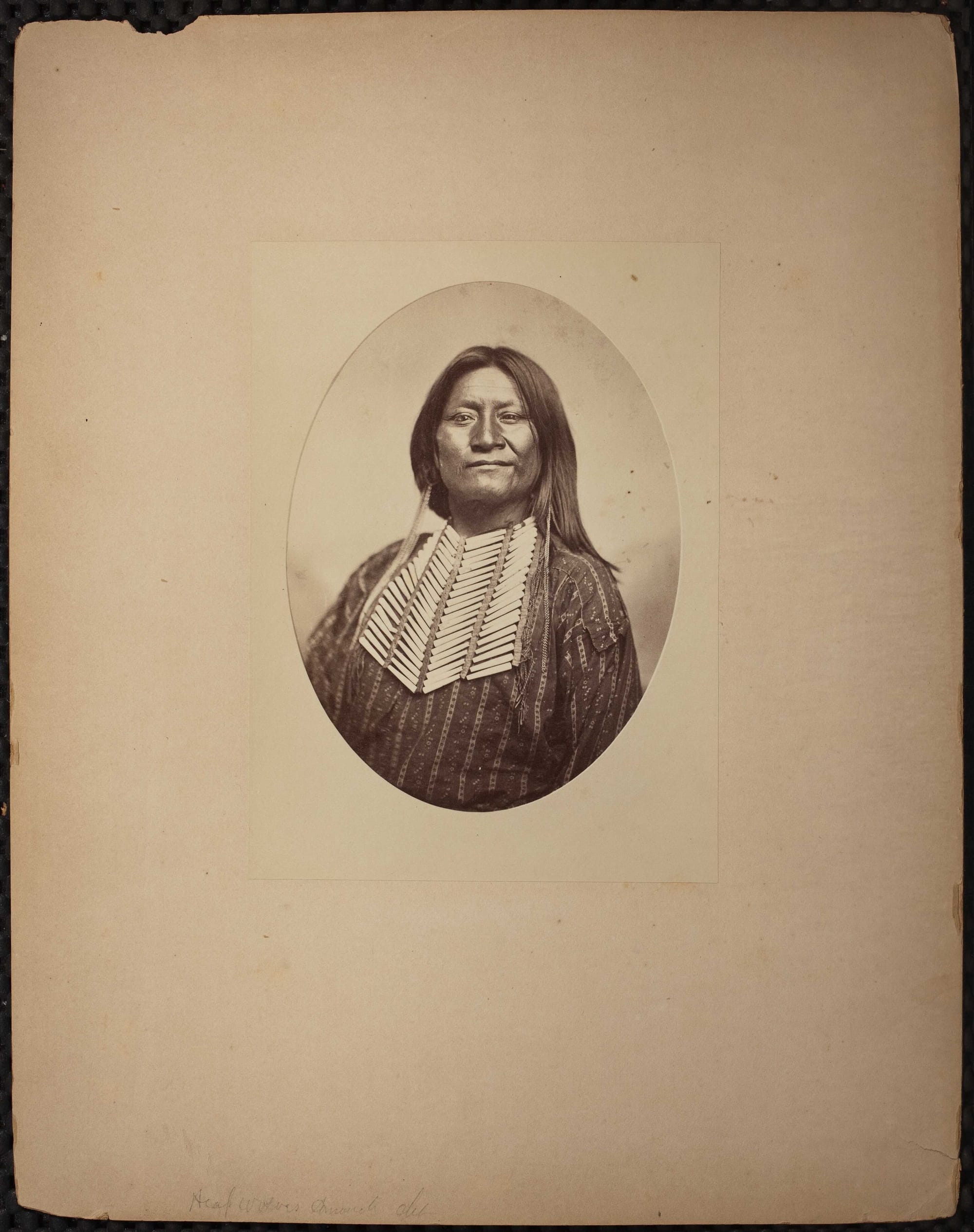
This photograph was taken between 1870 and 1874 by a man named William S. Soule. While it appears in several institutional archives, including Harvard's Peabody Museum and the Smithsonian, the specific details of this encounter are not always clear.
On the bottom of this album page, there is a faded inscription that I think says: "Heap Wolves Comanche chief". That is how the subject is identified in both the archives noted above, though I have not been able to find much reliable information about a Comanche man named "Heap Wolves" outside of these photographic archives.
Soule was a photographer stationed at Fort Sill, Indian Territory, between 1869 and 1875, where he documented the construction of the Fort, as well as took portraits of the Indigenous people imprisoned there, including Heap Wolves.
Sometimes referred to as a "chief," Heap Wolves was photographed by Soule in the studio he set up at Fort Sill. The photographer portrays Heap Wolves seated and from the waist up. In this version, the album page is framed by an oval matte overlay, focusing the viewer on the subject's face.
He is wearing a bone breastplate that extends from his neck to his upper abdomen, as well as hoop earrings that each seem to have a long metal (possibly silver) chain running parallel to the breastplate. Underneath, he has a calico shirt with a tiny floral pattern in alternating bands. (I picture this shirt as navy with white flowers). His hair is long, framing his face and falling behind his shoulders. His arms are at his sides, perhaps hanging down, perhaps folded in his lap out of the frame.
Heap Wolves has glistening skin, a deep complexion highlighted by the sepia hue of the photograph, the white bones that make up his breastplate, and the even light cast across his cheeks and forehead. His gaze is turned toward the camera and his eyes reflect a glint of light that would have been angled toward him in Soule's studio.
He is smiling. I cannot escape the slight upturn on the left side of his closed lips. Perhaps more accurately: he is grinning. We can see the flexion of the muscles in his cheek, creating a deeper shadow on his left side, accentuating the cheekbone, a minute twist of the chin, a curl in the commissure.
These are tiny gestures that together create a sense of ease, a lightness of purpose.
In contrast with the vast majority of nineteenth-century photographic portraits of Native American people, especially those imprisoned at Fort Sill, Heap Wolves stands out for his lack of stoicism. A lack of downtrodden acceptance of fate. He refuses to emote failure.
His grin disabuses us of the notion of Indigenous defeat. Instead, he gives us if not hope, at least a sense of cunning resilience to the ongoing onslaught of colonial administration.
"Let me take your picture," Soule might have asked, or demanded, or perhaps it was Heap Wolves who asked, "take my picture," and in the ensuing minutes, he held the smile, the slight grin, the muscles solid, eyes soft, shoulders relaxed.
He could be proud in this photograph. He could be thinking of his family, his extended kin networks, out there beyond. He could be thinking of the history books written by white men, histories that would include him, in this moment, and rather than shrink away, he breathes deeply, holds his breath, and stares back at the man with a camera, looking past him, toward somewhere else, someone else. A memory, perhaps. Or a future.