Appropriation at the World Cup

Like millions of people around the globe, I've been watching the World Cup. I haven't watched every game, but over these past couple weeks, I've seen flashes across the screen of something I didn't expect: Plains Indian war bonnets.
I have seen fans wearing this iconic symbol of Native American culture–one that has very specific meanings and protocols (more on this later)–from Uruguay, Argentina, Morocco, and Mexico. Once might be a fluke, but fans from four different countries wearing a war bonnet on FIFA's global feed is a trend. I'm asking myself why.
Apparently FIFA did a land acknowledgement before the US v Paraguay game in Inglewood, California.
And apparently, FIFA partnered with the Puyallup Tribe in Seattle to host a traditional welcome, as well as cultural events and watch parties.
The FIFA code of conduct does not explicitly prohibit wearing Native American regalia, but in my cursory reading of it, there are at least two sections that apply regarding Prohibited Items (Section 3.1.24) and Behavior at the Stadium (Section 4.2.25). Both explicitly ban apparel and "paraphernalia" that are "political, offensive and/or discriminatory" on account of race, ethnicity, or national origin.
To put a bit of analysis to this: the use of Plains Indian war bonnets by World Cup spectators reveals a clear contradiction between FIFA's official code of conduct, which prohibits offensive or discriminatory apparel, and the reality that has been broadcast globally. Perhaps the issue lies with the individual stadium organizers, who are not aware that a war bonnet is a sacred item, and its use by non-Native people is offensive. Or, perhaps, the issue is that these stadium officials are assuming that anyone wearing a war bonnet is Indigenous, and therefore, the use of the war bonnet is acceptable, or they are unable or unwilling to make an inquiry into the "status" of this person.
FIFA is partnering with Native communities in some circumstances, while allowing fans to disrespect Native communities in others.
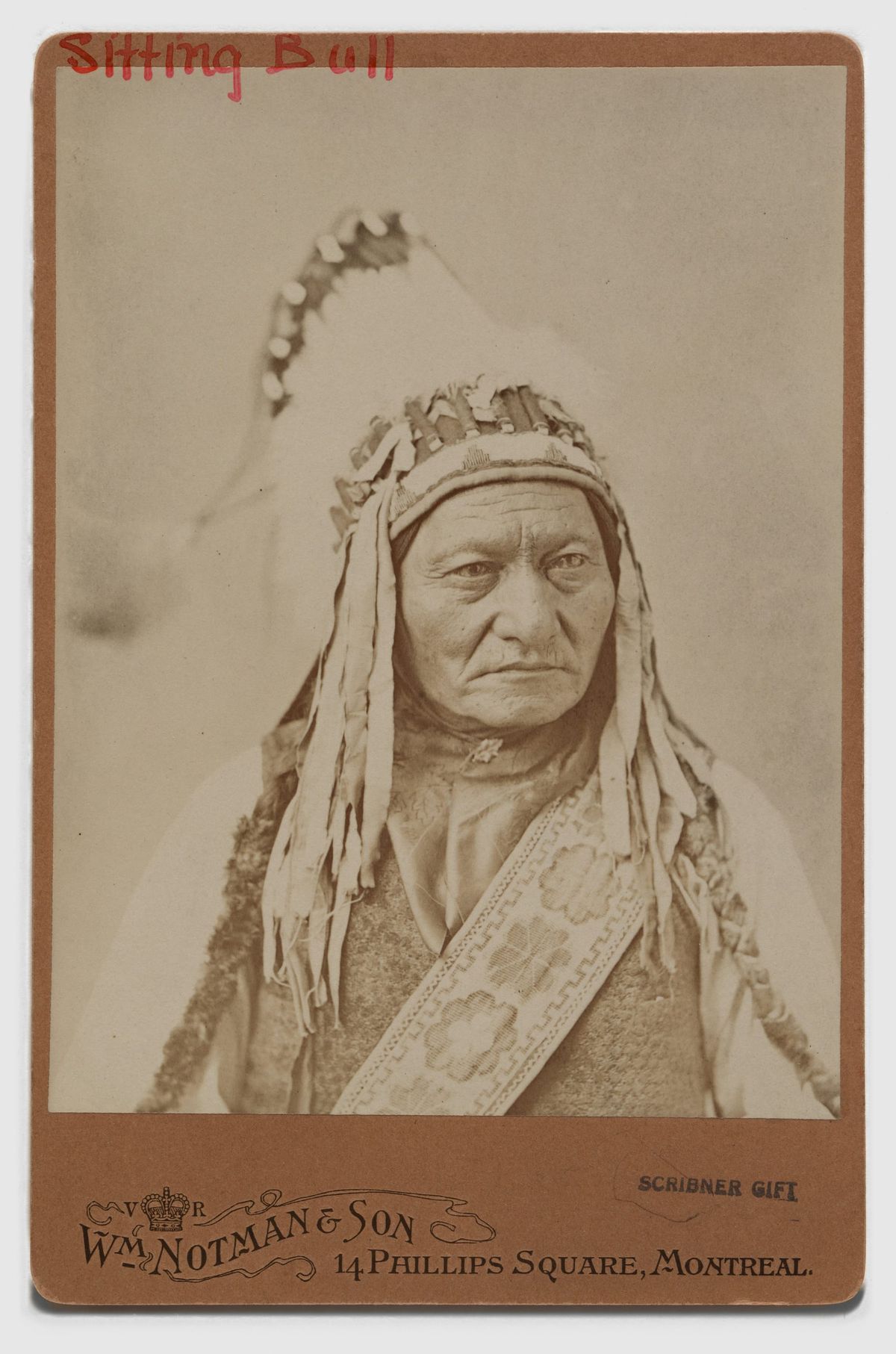
Lakota, Dakota, Cheyenne, and other Plains tribes each have particular stories related to the origin of the war bonnet. Northern Cheyenne scholar Leo Killsback, has written a detailed account of contemporary repatriation efforts, as well as the history of Cheyenne and Lakota war societies, spiritual practices, and the material culture involved in creating and earning war bonnets. One did not simply wear a war bonnet, it was and is a sacred responsibility earned through demonstrating skill or bravery in battle.
And yet, for at least a century, white American artists and politicians have rendered the war bonnet a symbol of a generic Native American warrior, devoid of context and spiritual significance. War bonnets were stolen or sold and displayed in museums, carved into cigar store Indian figures, and portrayed in cartoons.
In 2020, the Kansas City Chiefs in the NFL, finally, officially, banned the use of war bonnets (and "Native" face paint) inside their stadium.
So, how are we to take the image of an Argentine fan donning this hybridized, war bonnet--clearly referencing the Native American history and material culture, but here constructed with commercial materials, including a geometric headband with colors more common in Latin America.
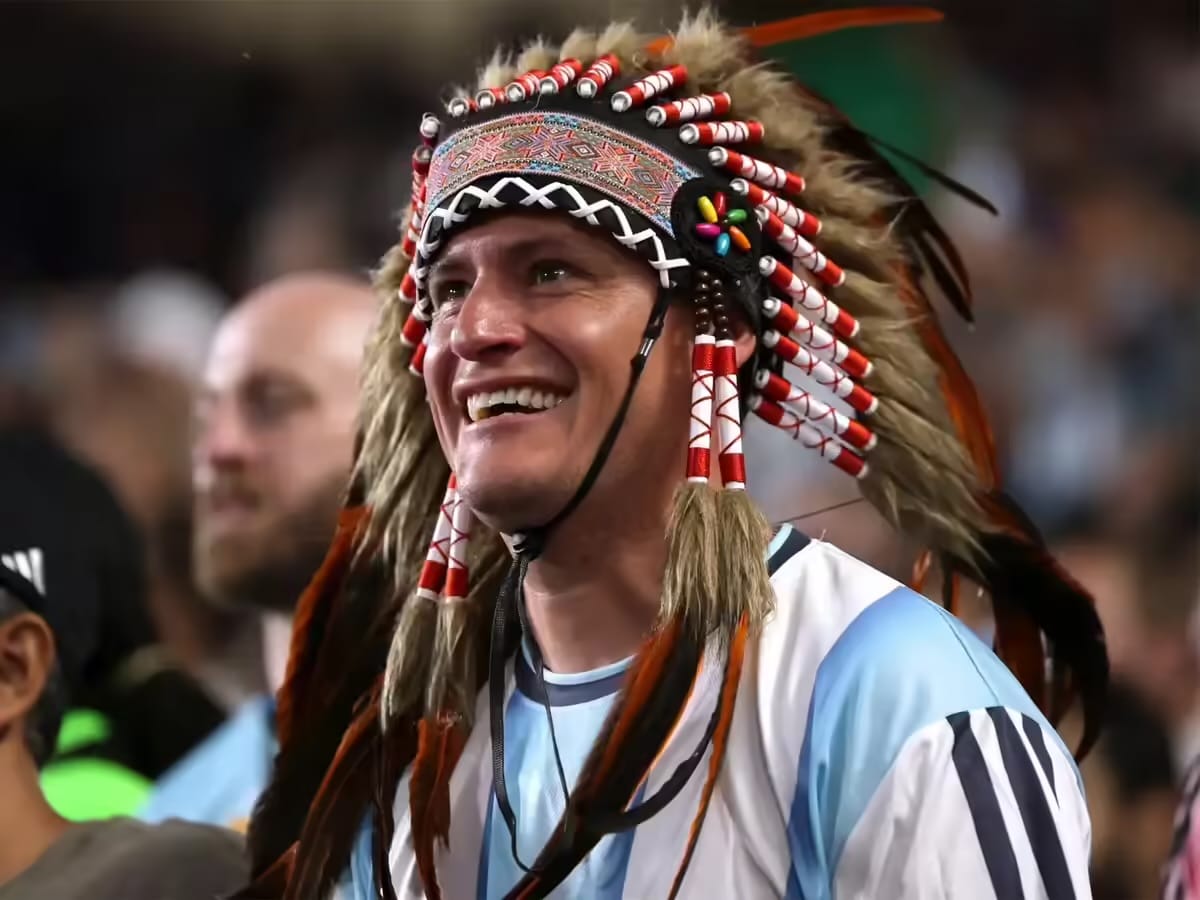
And in case you were wondering if this guy made it himself, I found a very similar one for sale on Etsy for $69 (only two left! order now!)
Native American imagery travels--and has for a long time. But in the context of the World Cup it shows how the generic image of the Plains Indian War Bonnet is either not viewed as "offensive," or there is a gap between FIFA's policies and their application, or both. Either way, it serves to erase actual Indigenous people, who nevertheless are courted as "partners" in FIFA's public facing campaigns.
And a final note, contributed by a random commenter from the peanut gallery: "But Argentina and Uruguay and Mexico had Indigenous people!" Had. In the past tense. We have to reject this framing, too.
Once more, the cultural specificity of this sacred object is erased, folded into Latin American mestizaje, as if to say that because we once had Indians, any of us can wear any Indian things, and its ok. Thus continues the manipulation of Indigeneity at the service of both big FIFA and nation states invested in our erasure, and people educated in those nations to believe in the vanishing Indian.
We witness ghosts on a screen, inhabited by fans in stadiums still constructed on stolen land.