First Day of Class
The footnote that was not one
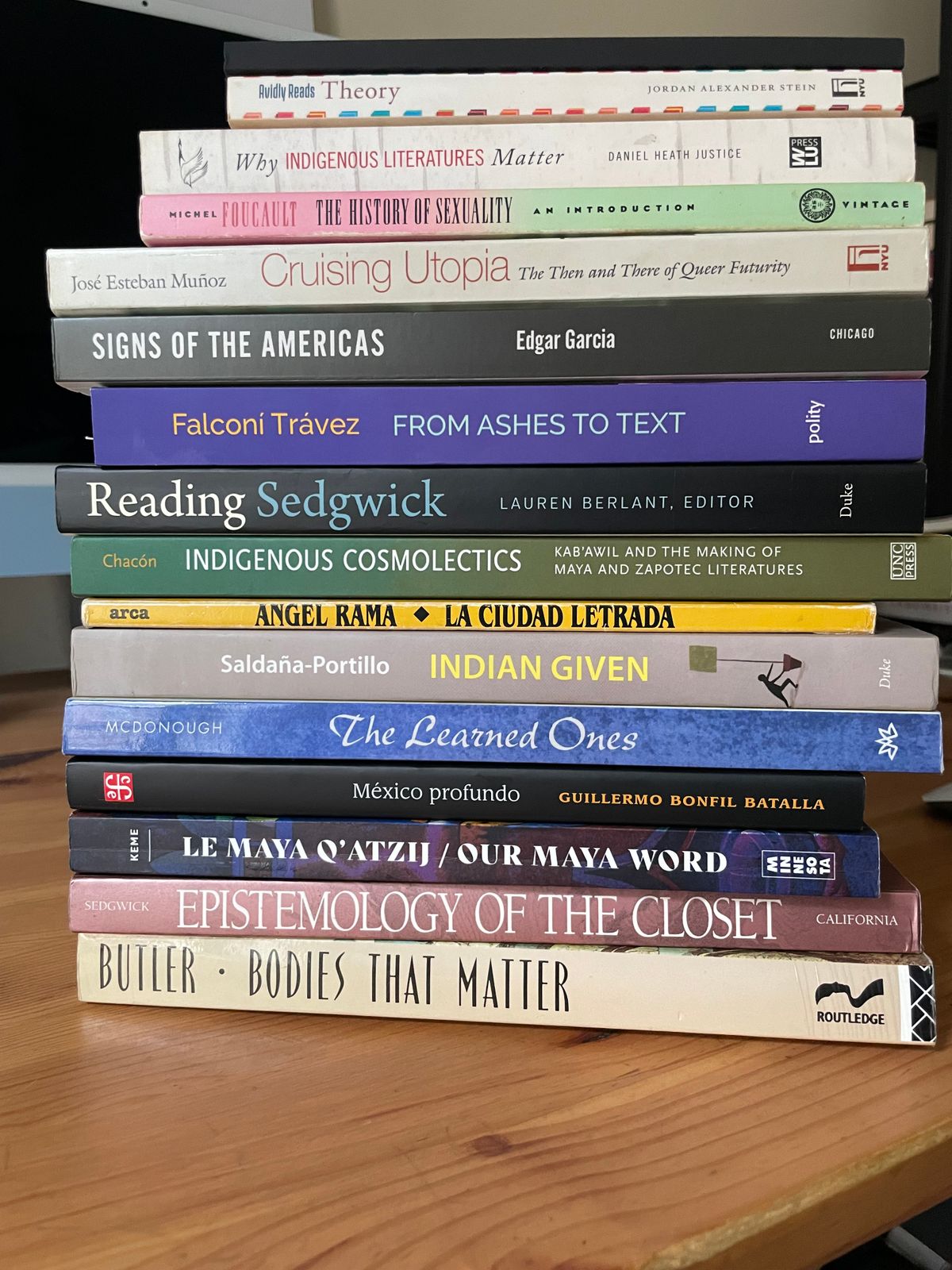
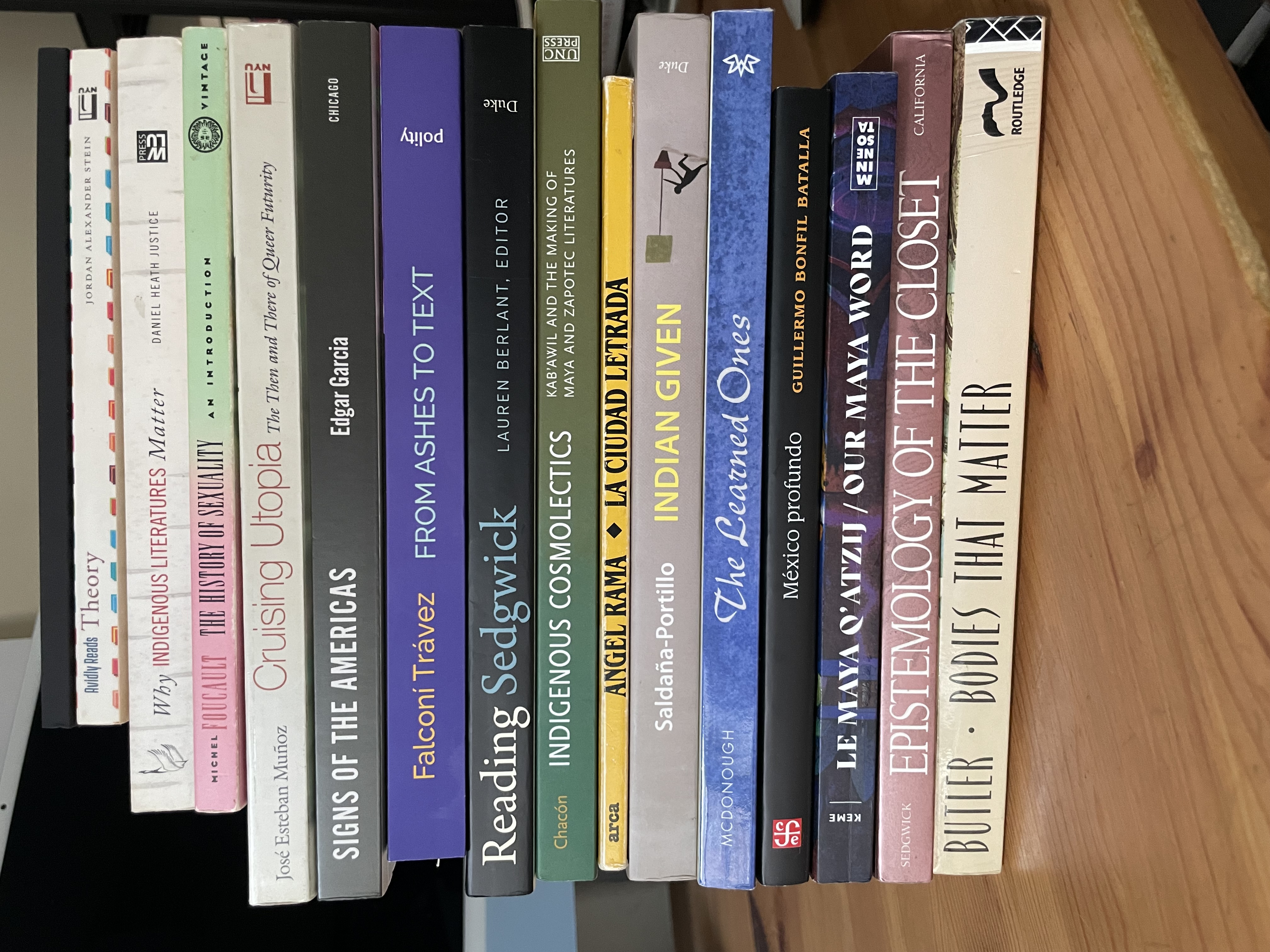
I’ll be teaching “Theory” this term as a graduate seminar. I’m excited. It’s fun. It’s enriching. I’m going to post the reading list at the end of this missive, but I really wanted to share the lecture notes I’ve been working on for the first day of class.
I usually teach in Spanish and sometimes take notes in English, as here, but for the Theory Class there will be a little bit of both.
Notes:
I want to make a few things clear at this point. I do not think it is the object of this course to read the canon. We will only read a few, very select, authors of what might be called “theory’s” canon. That course likely exists somewhere, but more likely, it exists in a different time.
That course, “Theory” might go like this: we would read Aristotle and then skip ahead to Kant, Hegel, and the stick with Marx for a while. We would take a detour with Nitsche, feel our feelings for a bit, and then get to Freud, Lacan, and Jung. But then we would have to work with Bakhtin, Sartre, and J. L. Austin, we would sprinkle in Simone de Beauvoir just to add a woman, and with this we would have prepared ourselves for the structuralism to deconstruction pipeline: Saussure, Lévi-Strauss, Barthes, Derrida, Foucault. Those French thinkers who revolutionized how we think of words and their meanings. We would dwell on Marxist criticism: Walter Benjamin, Althusser (grumbling about his Nazi past), Raymond Williams, Frederic Jameson. And by this time the course would probably be over. We would have left ourselves satisfied with the classics, the Western canon and how it questioned the use of signs, the meanings of latent desires, and the forms of meaning-making of universal texts. If we wanted to be clever, we might skip the early stuff and start with the French guys. That would leave us time to finish with feminist literary criticism, or maybe the beginnings of queer theory: Julia Kristeva, Monique Wittig, Hélène Cixous; Sedgwick, Butler, and Gayle Rubin. We would have finished with “women” and thought ourselves progressive.
I mean, fine. This is a perfectly reasonable theory course. It touches on the progressive history of ideas, critical and theoretical concepts like the sign, desire, the author, history, power, art, gender, sex. It does those things, but it is also a list of writers for whom the context of Europe and the United States is an unspoken norm, one that does not contextualize itself, but merely adheres to the progressive understanding of culture as a universal western construct from the Ancient Greeks to contemporary Europe (to France, lol).
That course is not this one. If you want to read those people—and I encourage you to read them!—you will have to do so outside of class. In a sense, I want you to know this because I think we need to be on the same page about why I am teaching this course in the way I am. Though these theorists are no doubt important, I am more interested in developing the skills required to think with and against them, than to dedicate time to the canon that has and always be there. In other words, I want this course to allow you to explore what you are interested in, develop skills and capacities for reading and thinking, but not necessarily teach you the same trajectory of “theory” that everyone everywhere always learns.
The approach I am working against may have worked in the 80s and 90s, as Jordan Stein is quick to point out, but the contingencies of theory always had a way of intervening in the canon, its history becoming something to work against, rather than something to adhere to with blind faith. So no, we will not be reading the canon, but we will be developing skills to read and think and write. That is more important, more lasting, than reading the classics and thinking we have done the work.
COURSE SCHEDULE
Part I: Theory: Ways and Means
Week 1. August 30 How do We Learn Theory?
Tompkins, Kyla Wazana. “We Aren’t Here to Learn What We Already Know” LARB. 13
September 2016. BS.
Week 2. September 6 How Do We Feel Theory?
Stein, Jordan Alexander. Avidly Reads Theory. New York: NYU Press, 2019.
Week 3. September 13 How Do Relate to Theory?
Justice, Daniel Heath. Why Indigenous Literatures Matter. Wilfrid Laurier UP, 2018.
Part II. Epistemologies and Literatures
Week 4. September 20. Humanisms and Textualities
McDonough, Kelly. The Learned Ones: Nahua Intellectuals in Postconquest Mexico. Tucson: U of Arizona P, 2014. Ch. 1, “Describing Nahuatl Language to Others in Early Colonial Mexico: Antonio del Rincón,” pp. 34-58. BS.
Bonfil Batalla, Guillermo. México profundo: Una civilización negada. Second Edition. Mexico City: FCE, 2019. Ch. 4, “El problema de la cultura nacional,” pp. 103-113 and Ch. 5, “El orden colonial,” pp. 114-142. BS.
Saldaña-Portillo, María Josefina. Indian Given: Racial Geographies across Mexico and the United States. Durham: Duke UP, 2016. Ch. 1, “Savages Welcomed: Imputations of Indigenous Humanity in Early Colonialisms,” 33-65. BS.
Presentation 1
Week 5. September 27 Speculative Relations
I’ll be presenting on my new book. Class will be held in HUM 1008 from 4:30PM-6PM.
Week 6. October 4 Cosmolectics
Chacón, Gloria Elizabeth. Indigenous Cosmolectics: Kab’awil and the Making of Maya and Zapotec Literatures. Chapel Hill: U of North Carolina P, 2018.
Presentation 2
Week 7. October 11 América
Keme, Emil’, “Para que Abiayala viva, las Américas deben morir: Hacia una Indigeneidad transhemisférica,” Native American and Indigenous Studies 5:1 (2018), 21-41. BS.
Garcia, Edgar. Signs of the Americas: A Poetics of Pictography, Hieroglyphs, and Khipu.
Chicago: U of Chicago P, 2020. “Introduction: Unnatural Signs,” pp. 1-36. BS.
Presentation 3 // Reverse Outline Due
Part III. From Modernity to Utopia
Week 8. October 18. Wilde Three Ways
Wilde, Oscar. “The English Renaissance of Art” (1882) BS.
“Oscar Wilde’s Lecture” New York Times (1882) BS.
Martí, José, “Oscar Wilde” (1882) BS.
Molloy, Sylvia, “Too Wilde for Comfort: Desire and Ideology in Fin-de Siecle Spanish America” Social Text, no. 31/32 (1992): 187-201. BS.
Presentation 4
Week 9. October 25. All About Eve
Eve Sedgwick, Epistemology of the Closet. Berkeley: U of California P, 1990.
“Introduction: Axiomatic,” pp. 1-63. BS.
Fawaz, Ramzi, “‘An Open Mesh of Possibilities’: The Necessity of Eve Sedgwick in Dark Times.” In Reading Sedgwick, Ed. Lauren Berlant. Durham: Duke UP, 2019, 6-33. BS.
Presentation 5
Week 10. November 1 José, Forever [Class by Zoom]
Muñoz, José Esteban, Cruising Utopia: The Then and There of Queer Futurity. New York: NYU Press, 2009.
Presentation 6
Week 11. November 8. Can we talk about it, though?
Smilges, J. Logan. Crip Negativity. Minneapolis: U of Minnesota P, 2023.
Part III. History, Knowledge, Theory
Week 12. November 15 Writing, Discourse, and “Writing”
Foucault, Michel. The History of Sexuality, Vol. 1. New York: Vintage, 1990. Part II The Repressive Hypothesis, Ch. 1. “The Incitement to Discourse” and Ch. 2, “The Perverse Implantation,” pp. 15-50.
Rama, Ángel. La ciudad letrada. Montevideo: arca, 1998. BS.
Cornejo Polar, Antonio. Escribir en el aire. Ensayo sobre la heterogeneidad socio-cultural de las literaturas andinas. Lima, CELACEP. 2003, Ch. 1, “El comienzo de la heterogeneidad en las literaturas andinas: voz y letra en el ‘dialogo’ de Cajamarca,” pp. 18-80. BS.
Presentation 7 // Abstract and Annotated Bibliography Due
Week 13. November 22 NO CLASS—THANKSGIVING/TAKING
Week 14. November 29 Gender?
Butler, Judith. Bodies that Matter: On the Discursive Limits of “Sex”. Ch. 1, “Bodies that Matter” 27-56. BS.
Vacarezza, Nayla Luz. “Judith Butler en Argentina: Recepción y polémicas en torno a la teoría de la performatividad del género,” Estudos Feministas 25:3 (2017): 1257-1276. BS.
María Lugones, “The Coloniality of Gender” Worlds and Knowledges Otherwise (Spring 2008): 1-17. BS.
Ochy Curiel: “Conferencia sobre feminismo decolonial” (link)
Presentation 8
Week 15. Literary Studies/Textual Possibilities
Falconí, Diego. From Ashes to Text: Andean Literature of Sexual Dissidence in the 20th
Century. Trans. Carrie Hamilton. Polity: Cambridge, UK, 2022.
Presentation 9
Week 16. December 6 Conclusions
Final Paper due by email on December 13