How we put ourselves back together
Thinking with Brenda Mallory's art
I was in Phoenix last week for the opening of Cherokee artist Brenda Mallory’s new show at the Heard Museum, “The North Star Changes”. Brenda had asked me to write the catalogue essay for the exhibition, and it was one of those dream asks, one you can’t say no to because of the kindness of the person who is asking you, because of the brilliance of their work, but also because we are both Cherokee. Brenda told me that she has never had another Cherokee write about her art. It wasn’t surprising, actually, but it made me think about this not just as an invitation, but as a structural problem. I was thinking that the opportunity was not just to have me, a Cherokee person, write about Brenda, another Cherokee person, but to think about what a Cherokee form of relation would look like in the context of an art essay. I don’t know if I managed it, but I think so. At least Brenda thought so.
I don’t know if I can explain what it was like to do something like this. Maybe I’m making too much of it, but the ability to think about how Mallory’s work is about suturing things together—I want you to see the seams, she is fond of saying. But these seams are dynamic. They are about showing us how to relate, in spite of ruptures, displacement, in spite of colonialism. Her work, Consensual Attachments: Across Time and Space (2022), for example, takes waxed cloth fragments and sutures their edges with hog rings (these are the rings farmers use to tag the ears of livestock). The title of this work in fact emerged out of a conversation we had in the lead up to this exhibition. Consensual attachments. I think about it now, and the piece reminds me of allotment maps—those fragments of land carved out of Cherokee Nation and our collective practices of land tenancy—but here these fragments are bound tightly, ringed. We see the seams. And sometimes those seams are violent, but there is a beauty in this witnessing. In seeing how the violence of extractivism or agroindustrialism or government land policies nevertheless can be reshaped into attachment, into belonging.
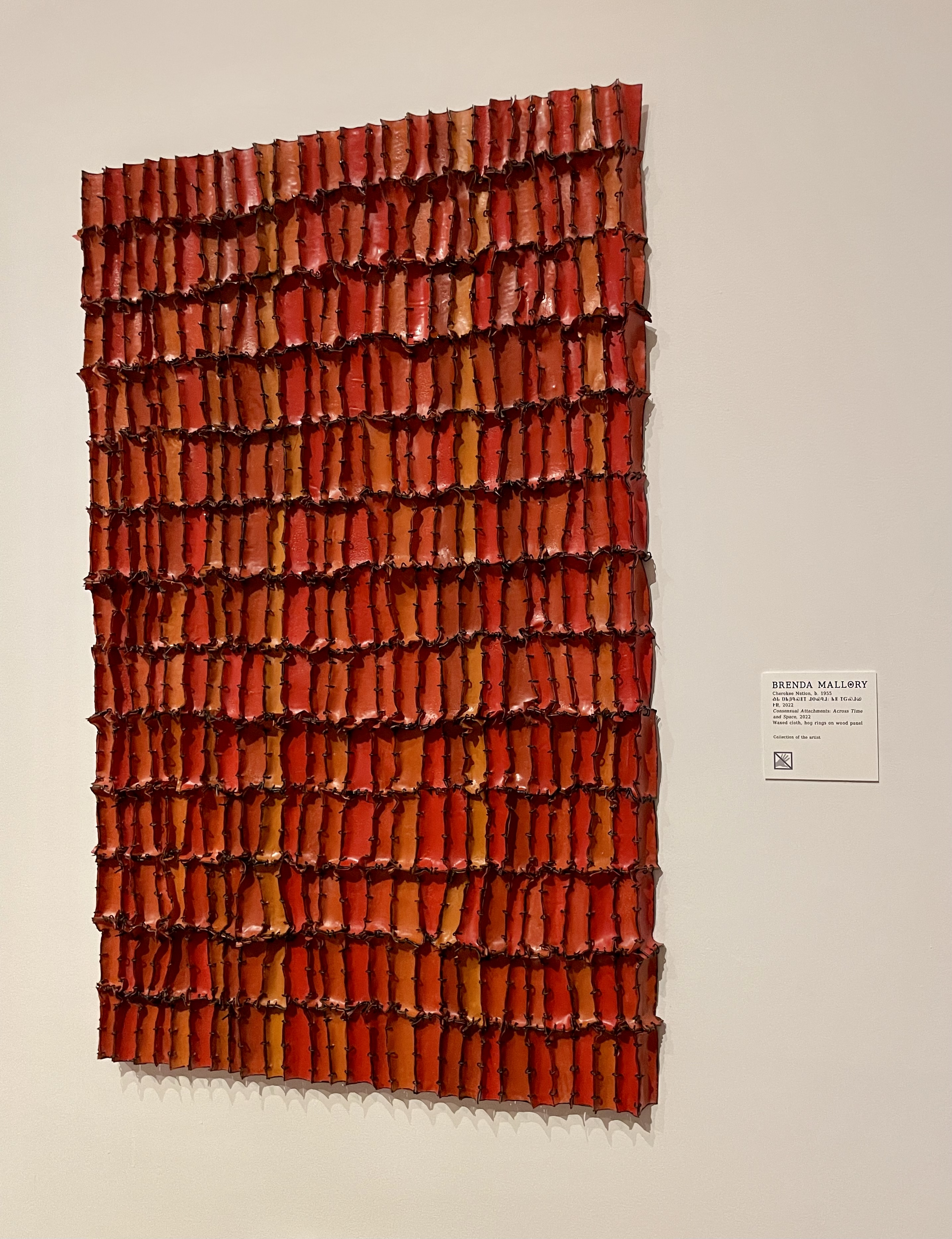
(Brenda Mallory, Consensual Attachments: Across Time and Space, 2022)
I don’t want to write too much more about the exhibition, though I do want to mention one more conjunction that I realized while actually being in the space of the museum, with the work hung and situated. The conjunction has to do with two other recent works, North Star (Guiding Light) (2022) and Precession (2022). I had written about the theme of the cross-in-circle motif for the catalogue text (the cross-in-circle is a very prominent symbol of the cosmos among Southeastern tribes). But standing in the gallery space, you could literally situate yourself between a cross (North Star) and a circle (Precession), and in so doing, position yourself at the center of the symbolic universe.
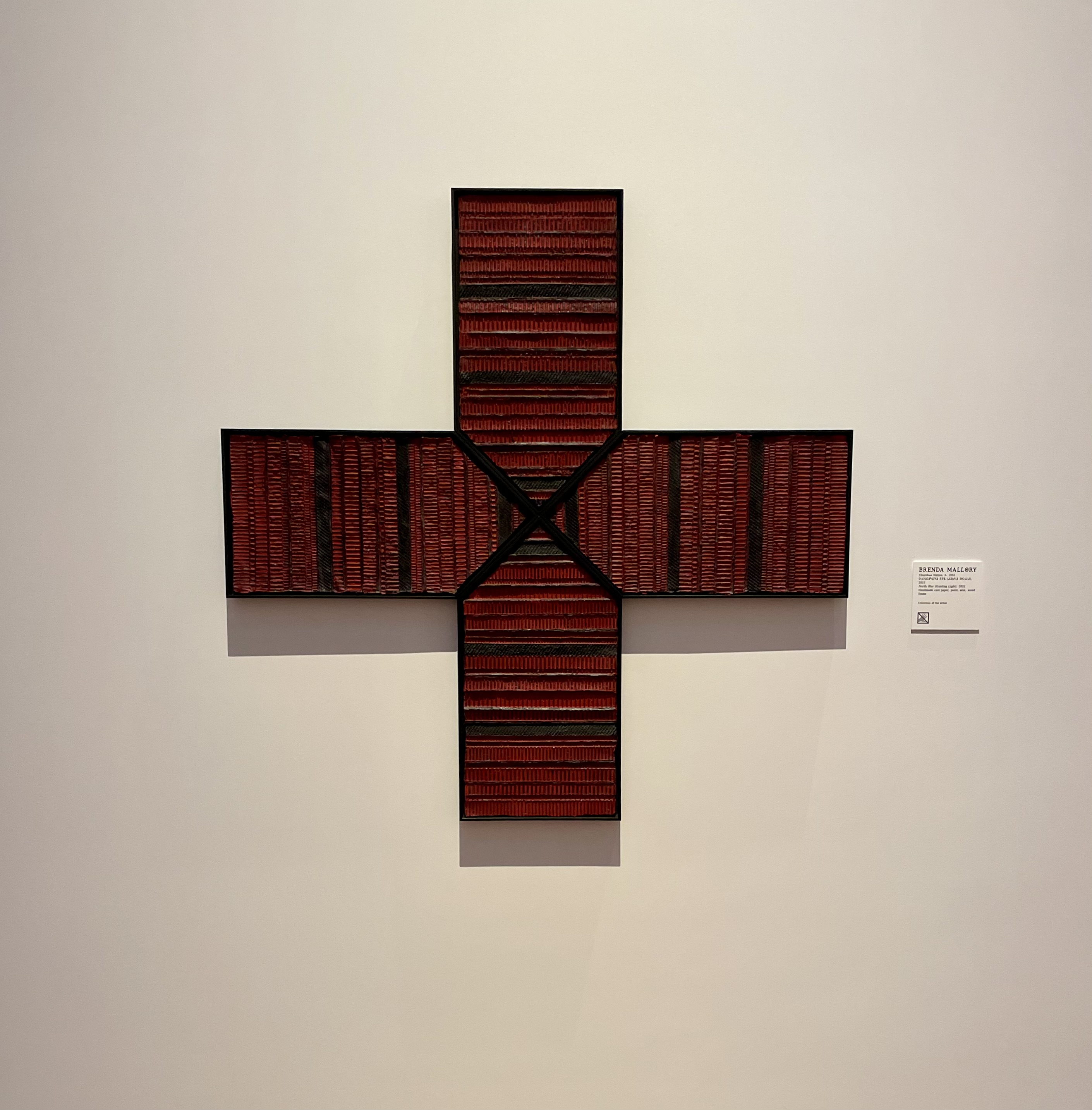
(Brenda Mallory, North Star (Guiding Light), 2022)
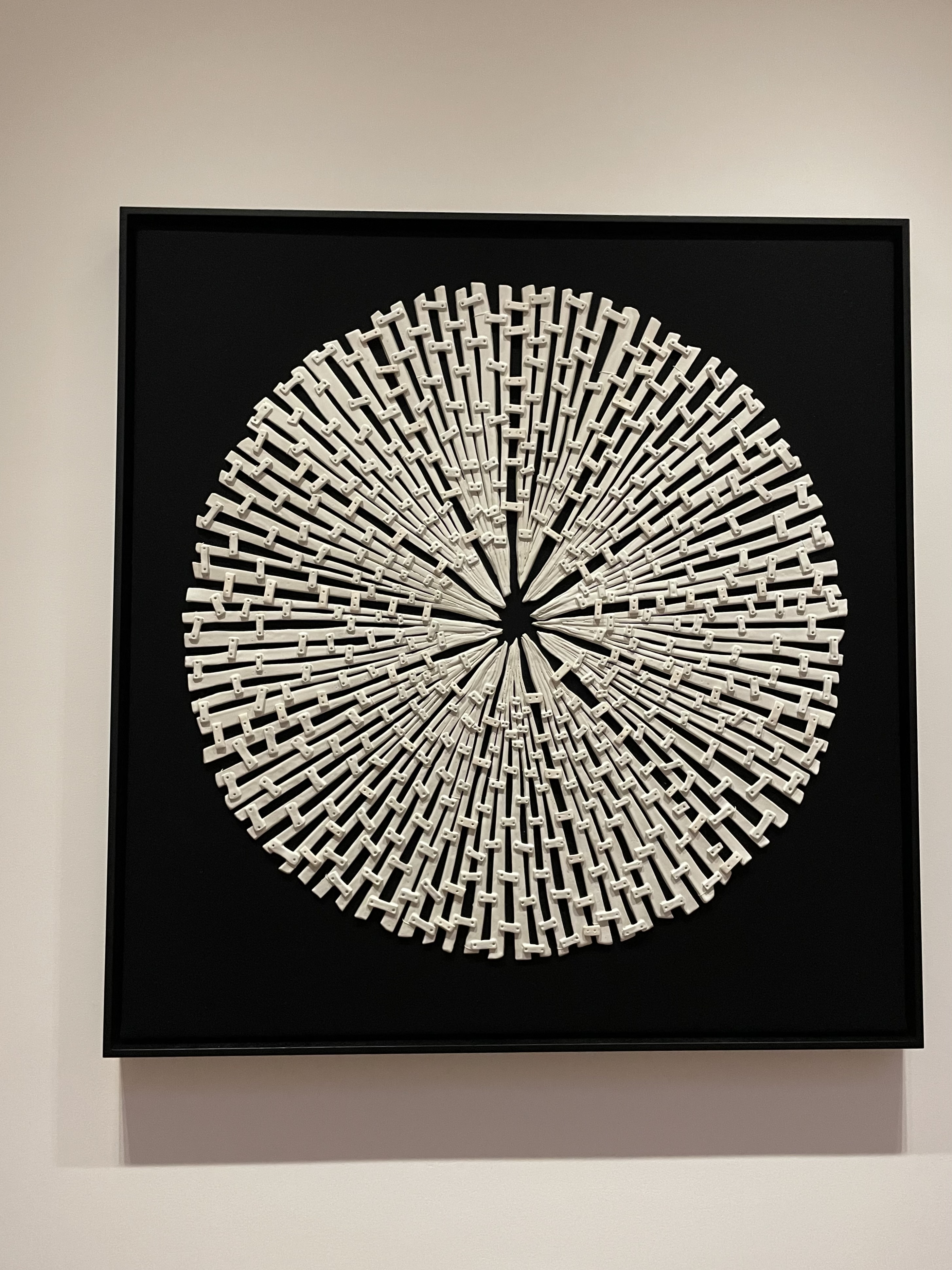
(Brenda Mallory, Precession, 2022)
I have a tattoo of this symbol on my right shoulder. A circle with a cross inside of it. It is a marker of the axis that connects the upper world to the middle world (where we are now) to the lower world. I wear that cosmos on my body to remind me of where I am, how I am situated, where the materiality of me exists in relation.
Mallory’s exhibition is about these relations—how the cosmos is not constant, but always in motion. How our bodies in relation exist in a vibrating (and at times violent) connection of forces beyond our human selves. But in this reckoning with our place (with place) we recall our responsibilities as kin, as people, as relatives in the Cherokee worldview. For that work, I am grateful.
Wado, Brenda.
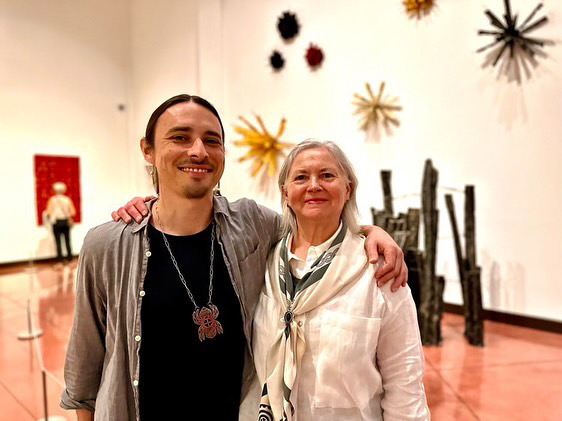
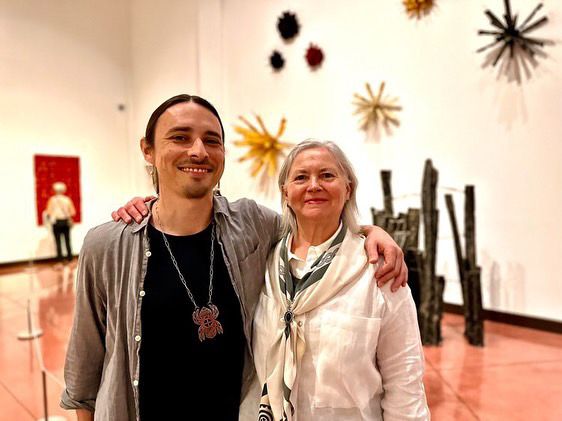
(Me and Brenda, photo by Jeff Goodman)