ICWA Upheld!!!
A thought and a feeling
The Supreme Court rendered its verdict on the Indian Child Welfare Act (ICWA) today (Haaland v. Brackeen), upholding the law primarily on the basis that the petitioners did not have standing to bring the suit in the first place. I am not a legal expert, so I can only read the opinion (here) as a literary scholar and interested party. But I am an interested party, personally affected by this law, or rather, the structures of Indigenous dispossession that the law aims to curb. More on this below.
One thing that stands out to me, at first glance, is that the argument that ICWA discriminates against white people because it gives preference to Indigenous families in adopting Indigenous children, was not substantively rebutted by the court, though it did state that the petitioners “have not shown that this injury [of discrimination] is ‘likely’ to be ‘redressed by judicial relief’ (p. 30). In other words, the majority opinion did not say that ICWA does or does not discriminate on race (most of us defending it repeat over and over again that Indigenous people are not a race, but citizens of sovereign nations), but that the petitioners could neither prove that discrimination, nor that such hypothetical discrimination would be relieved by overturning the law. I take only a small amount of comfort in this. Of note is Gorsuch’s dissent which essentially invites an individual who feels they have standing to to try a similar case presumably to overturn it based on this erroneous but powerful racial logic.
The standing issue is important, but I want to clarify that the standing matters because none of the individuals (the Brackeens, Librettis, Hernandez, and Cliffords) were ultimately prohibited from adopting an Indigenous child. All of these individual families who brought the suit have the Indigenous child that was the subject of litigation (ICWA). Thus they cannot prove injury, which in this case would mean that the would lose or would not be able to adopt the Indian child, because they already have the Indian child. The tribes essentially allowed them to keep the children rather than subject them to further trauma. So one reason they don’t have standing is that they cannot sue over something that hasn’t happened yet—i.e. there is not an actual case in which they are being prohibited from adoption an Indian child, but a hypothetical future one in which they want to be able to do so. The court wasn’t having it.
Anyway, that’s not what I wanted to write about really. I wanted to write about how personal ICWA is to me. I have written about this before (here, here, and here, and podcast here), and I won’t repeat myself too much in this post. But I do want to give voice to the intergenerational issue of ICWA.
My father was adopted by a white family as a newborn in 1952. This was 26 years before ICWA was passed, almost a full generation. When I was growing up, my father knew nothing about his biological parents. We did not have the tools. We knew that we did not know. We knew his dark skin, his face, his eyes; my skin, my eyes, my face. But we did not have the ability to recon with that lack, that rupture.
When I was in my early twenties, my dad was in his early fifties, he went through the process of opening the sealed adoption records. We found out that his mother was named Ada Rock, and that she was Native American. There it was in black and white on the original birth certificate. What do you do with this information?
We went through the process of finding her. She was still alive, then, and one day my mom called her on the phone, out of the blue, and told her that she was the wife of the child Ada had given up for adoption fifty years earlier. “I always hoped you would find me,” she said.
What do you do with this information? What do you do once you have found out that your mother (my grandmother) is Cherokee and you simply did not have the ability to know that before? This is what ICWA is supposed to prevent. It is meant to make children like my father, and by extension me, no longer disconnected from our Indigenous kin. It is meant to make my father, and by extension me, impossible, or at least improbable.
I’m fine with that. Truly. I may not have existed were ICWA in place when my father was adopted. This hypothetical won’t get us very far, but still.
The point is that ICWA being upheld is a tremendous relief for people like me, people whose families have been disconnected by adoption. I am one of the lucky ones, really, in that we were able to find my grandmother. Many people are never able to find their kin.
But the issue of adoption and the ruptures it creates is one that I know in my bones, in the hesitation I feel when claiming my place as a Cherokee citizen, even though, precisely because, my story is one marked by this pain, this disconnect. I cannot shake the feeling that because of my father’s adoption, I am somehow deficient. That I lack some essential element that would resolve the gaping hole in my sense of self, in my soul, in my heart.
It has taken me decades to figure out that this gaping hole is exactly what settler colonialism wants me to feel. It is the precise feeling that I am meant to experience as an Indigenous person because of settler colonialism. The trick is not letting the settlers win. Not letting them erase you (me) by allowing this self-doubt; not allowing this disconnection to be the end of the story. And so, we create new stories, we reconnect. We learn. We survive.
I don’t know if any of this makes sense, but ICWA being upheld makes me stronger. Makes all of Indian Country stronger, knowing that our children (our selves) are less likely to be stolen, as they (we) have been for centuries by settlers who can only see Indigenous children as obstacles to progress, trophies, or a means of entry into God’s grace (the fucking evangelicals, man).
But fuck that. Here we are, adoptees, children of adoptees, living, thriving, carrying on, even though, especially because, the settler state has sought at every turn to eliminate us.
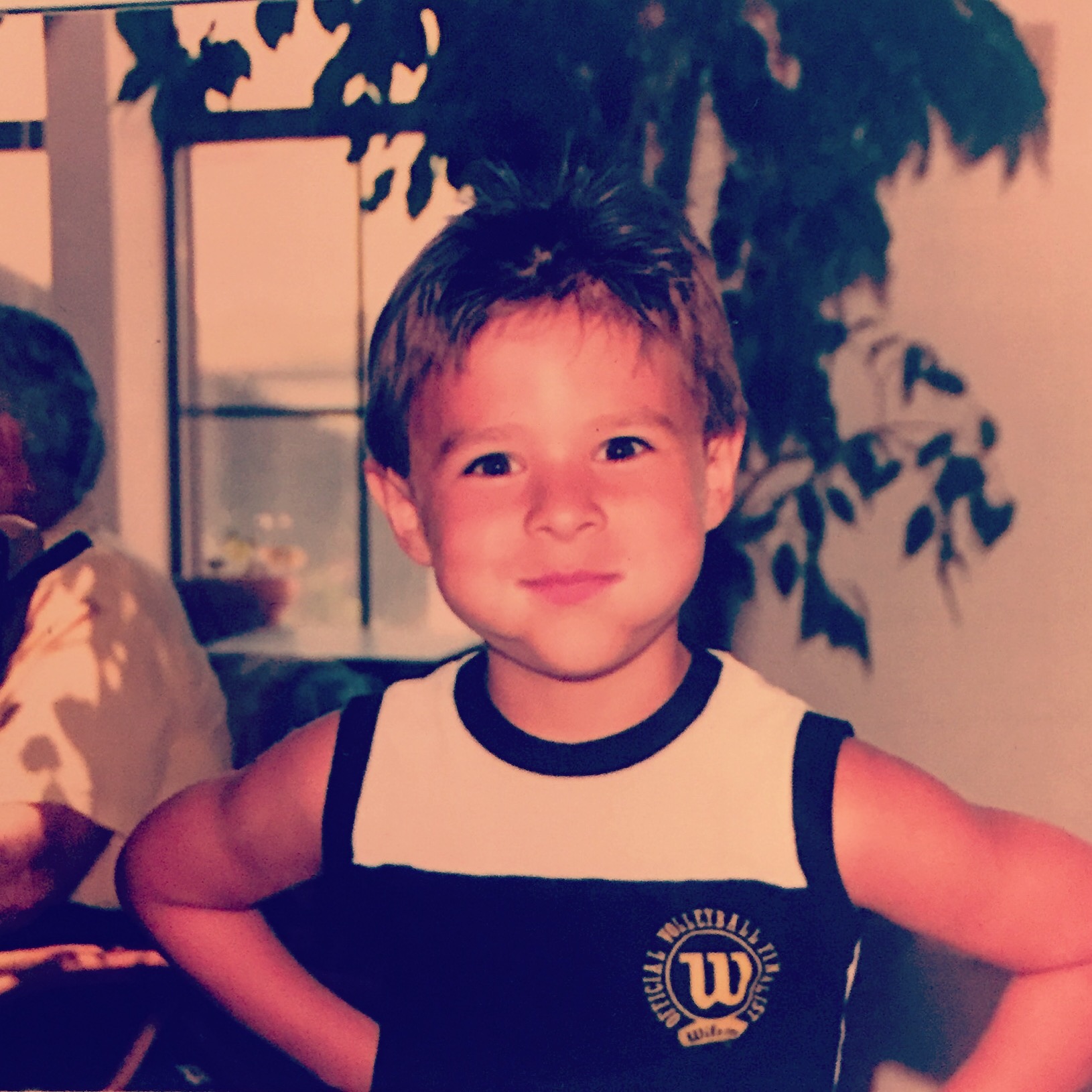
(Baby Joseph, an Indian, before knowing he was Indian)