Page Proofs!!!
The book looks like a book
Kin, the proofs are here! This means Speculative Relations looks very much like an actual book—not a Word document with a million queries, not a pile of scratched out, rewritten thoughts, but an actual formatted, paginated, justified, single-spaced, book.
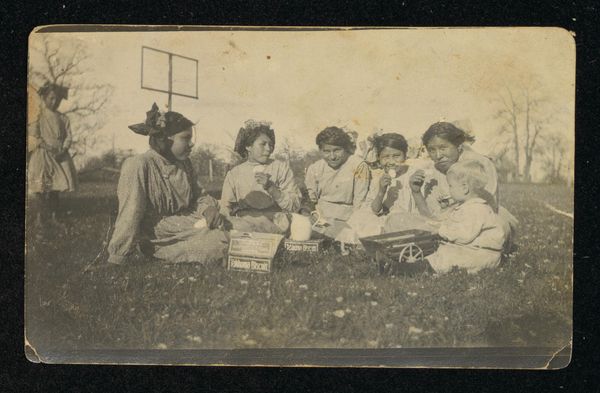
There are photographs where they should be and even color inserts. There will be 8 color images in the book, including work by contemporary Indigenous artists Cara Romero, Fritz Scholder, Jeffrey Gibson, Jaune Quick-to-See Smith, and Raven Halfmoon. There will also be more than twenty black and white images—including work by Dayna Danger, and a bunch of photographs by late nineteenth and early twentieth century ethnographers.
I can’t read the whole thing on a screen. I just can’t. So, I printed it all out because I need to sit with a pen in my hand and go line by line making sure there are no errors. I’m sure there will be some. I need to mark it up and then make those changes on the digital copy. And once I send it back, the press will review it once more themselves. It’s a lot of reviewing. But the hope is that after all of that, we’ll be able to sign off on the manuscript part by mid-March, at which point there may also be some ideas for the cover. This also means that I’m sending the proofs to an indexer, and need to make sure that makes sense, too. But I love a good index!
The review process, as I’ve noted before, is cyclical. I’m in the part now where I have to go through this book and reread things I wrote a year, two, three, four years ago. And sometimes I love it. Other times, it feels cringe. Like I can’t believe I said that, then/now, and I kind of wish I could change it. Rewrite things. But I can’t. It’s too late. Or, perhaps, it’s more like: you wrote this then, and you have to let it be. You have to let the thing be what you said.
A lot of writing is letting it be. Not allowing yourself to tinker things to death. To tinker and fidget and never let it get published. A little turn of phrase. A few repeated words (bonus points for anyone who can guess how many times the word “relations” appears in the book), but most of all, this moment feels like me coming to terms with the fact that this work is leaving my hands, leaving my body, leaving this desk and going out into the world where I will no longer be able to control it.
I’m sure there will be people who find it too sappy (emotional, sensitive, sad-girl), and others who will want it to be a different book than it is. This is the part where I pray for the willingness to let it go. To let myself be ok with what it is.
Don’t get me wrong, I love the book. I’m so very fucking excited for you all to read it. I think it’s fucking important. I believe in it, in what I’m saying, in what the book makes possible (for me, for you), in the world. But there is this part of me, too, that knows I’m about to start worrying about “what people think”. And that is not healthy for me, or anyone really. It’s part of the paradox of writing. I want the book to be out there, and then, of course, I get all emotional and fixate on the people who have little tiny nitpicks and gripes, rather than all the support and encouragement I’ve received along the way. Multiple people have read the manuscript. Multiple professionals, colleagues, friends. I have presented parts of it at dozens of universities and conferences. I’ve worked on this for years. But I still have this perfectionist worry that my individual worth is tied to this book—and really isn’t. I’ll be fine.
I’m going to try to be better about all this. I want to say this and mean it: I will try to focus on what the book brings to the world, rather than what it could have said or didn’t say. I want to be a good relative to this work once it’s out there, and now, too. While I’m sitting here pen in hand, flipping the pages one by one, one last time.