Provincetown, Colonial
Gay NDN ghosts and a wedding
Beginnings
I don’t really know what I’m doing, but I hope this substack helps streamline announcements, thoughts, works in progress, and an occasional poem. I’m not imagining this as a full time blog, but more like a space to share what I’m already working on, and to reflect on a few of those things as they emerge.
For example, below I start out with a note about being in Provincetown last week. It was beautiful, but also very crazy.
Also, I’ll be going to Berlin next week, and I am SURE I’ll want to document being an Indian in Germany—I’m girding my loincloth for hobbyist shenanigans and “oh there are still Indians in America?” vibes.
And then, I’m going to be on fellowship next fall (an internal fellowship with Stony Brook’s Humanities Institute) and I’m thinking that this will be a good way to document some of the work that I’ll be doing, both individually and as part of that fellowship (i.e. workshops, talks, etc.). So, for now, this is a beginning and an invitation to let me know if this works, or not so much.
Provincetown
One of my partner’s best friends was getting married last weekend, so we took the opportunity to rent a car, take the dog, and drive (but Jesus it took forever) to Ptown from the city. We stayed with our friend Eric in a town called Truro, which I swear to god I though was called “churro”—like the Spanish dessert. We’re going to churro. My friend lives in churro. And finally I saw it on the map, and was like, ooohhhhh.
The wedding was intimate—held in a tent on the parents’ front yard, and despite the cooler than expected weather, it was sweet. I ate a whole lobster and danced and talked with lots of nice people.
But what I want to think about is the raging settler colonialism in Provincetown. It was not unexpected—I can hear you saying, but of course, Joseph, its Plymouth Rock and Pilgrim villages and all that. Yes, I know. But what I didn’t expect was the random street sign that read, “Indian field” or “Indian point” or “Indian neck road”. What a haunting presence, a reminder of absence, of past-ness.
Near Eric’s house there was also a street sign that read “Thickly Settled”. And I still don’t know what that means, but it is telling how much the concept of settlement is ingrained in the topography of the area. I think it meant that there were a lot of houses on that street and to drive slowly, but (lol) the semiotics tell us so much more.
At one point I said to my partner, “there is no Native present here, no aliveness”. And I think I was expecting that, but then to be strolling down the main street in Ptown and to have a ghost emerge in the form of a sign or a plaque was really jarring.
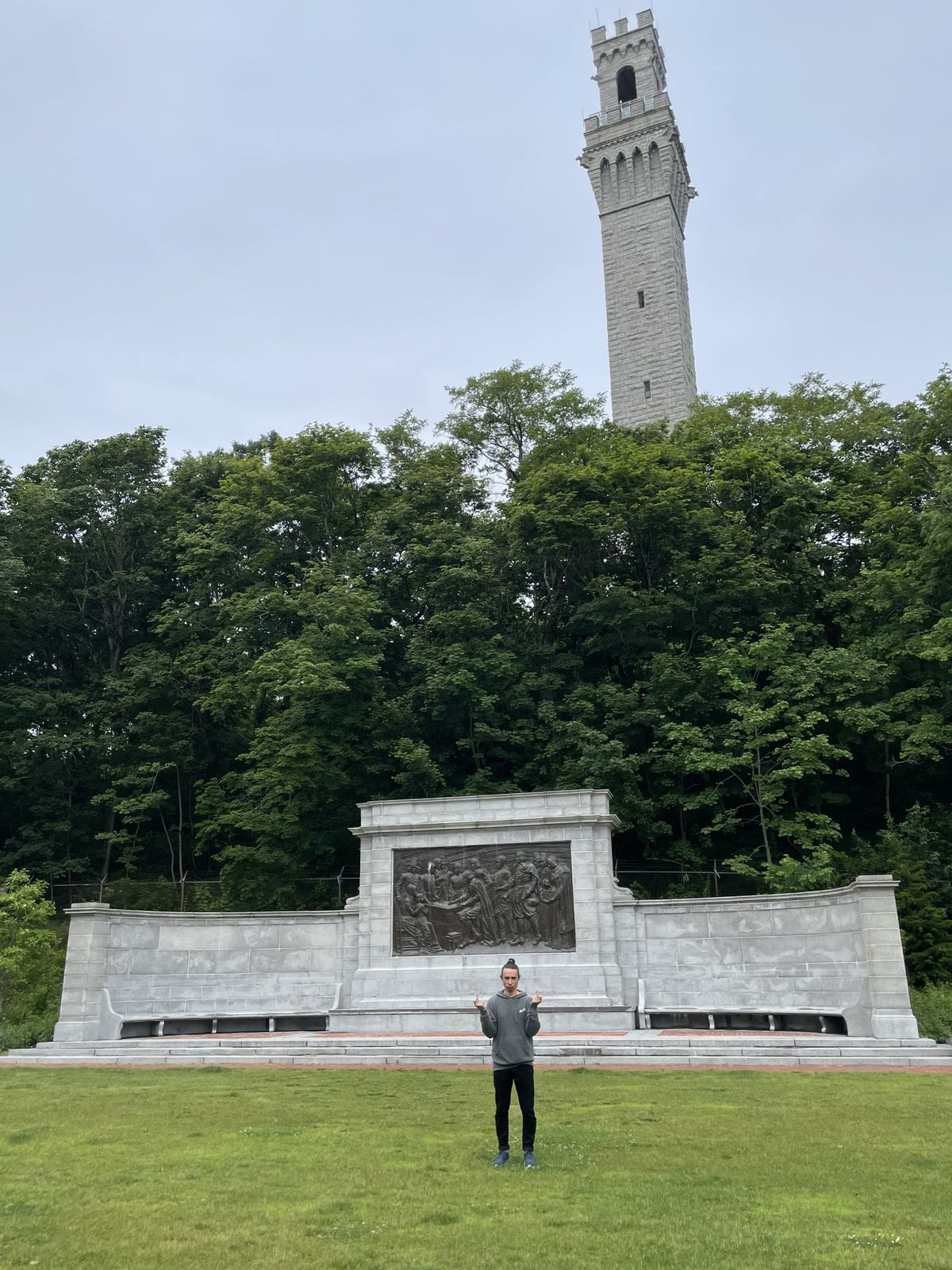
And then there was the giant settler phallus towering, literally, over the area. We didn’t go up to the top, but I did ask my partner to take this picture of me wearing my “You Are On Native Land” sweatshirt, flipping off the pilgrims.
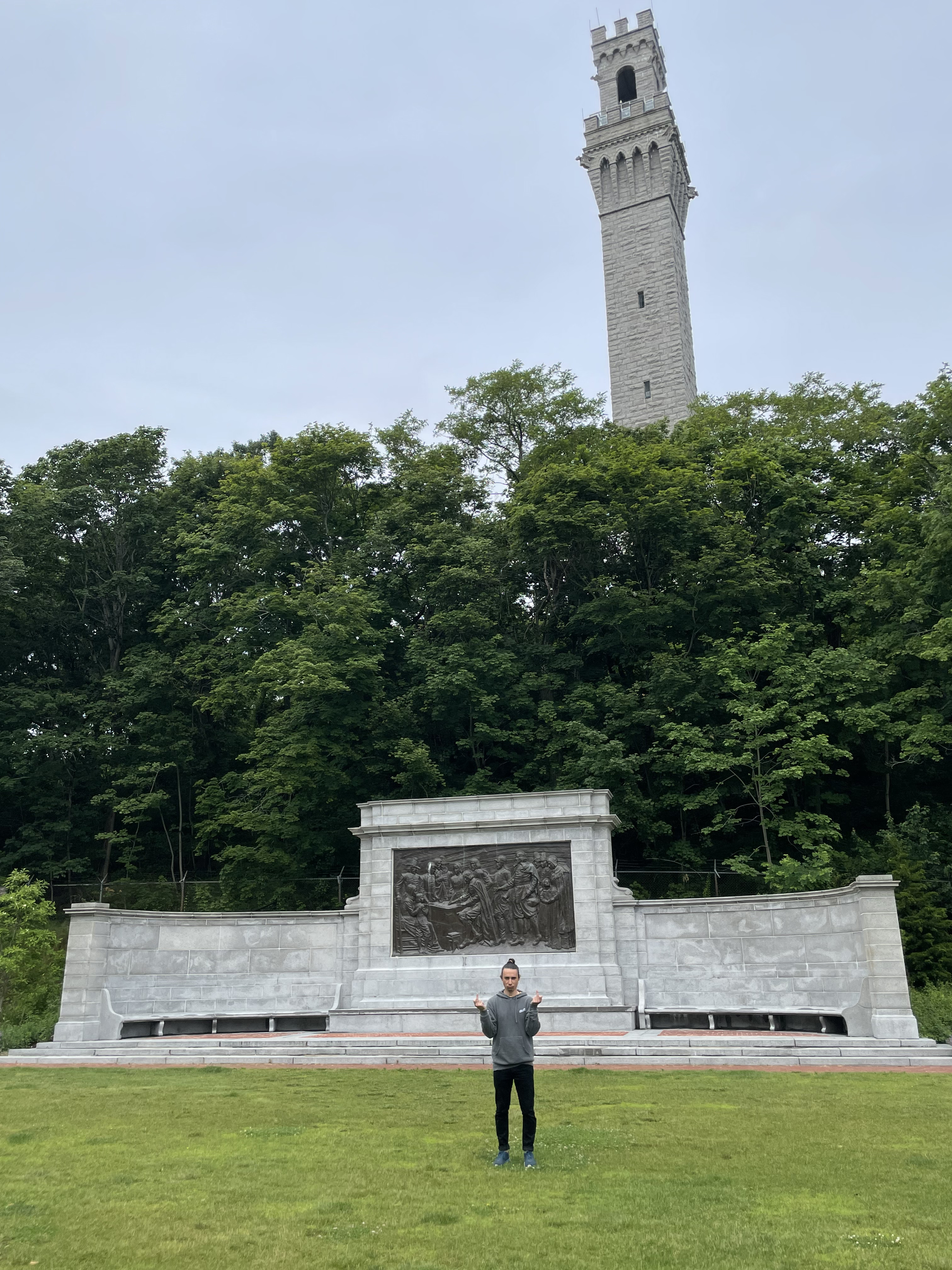
But I don’t really know what to make of it. Ptown is a gay haven, but also super colonial, but also an artistic space. These things are not incommensurable, of course, but what really strikes me is how overwhelmingly colonial the narrative of this place is, and yet, at the same time, how frequent the allusions to an Indigenous presence (absence) are, too.
Indian point
Indian head
Indian neck
Indian field
Indian pond
Indian springs
Indian well
Indian road
Indian circle
Indian beach
and on and on
My friend and colleague Liz Montegary wrote a chapter about Ptown in her book Familiar Perversions that deals with these types of overlapping discourses. So I’m glad that there is at least some recognition of this in the literature, but I think there needs to be a lot more work on how the colonial fantasies of Indigenous erasure are propped up by gay tourist destinations like Provincetown, Fire Island, South Beach, etc. But then again, perhaps this is also a way of saying: American gayness depends on American settler fantasies. And those fantasies are only viable when actively erasing Indigenous people. Even when we’re there, we become ghosts haunting high tea on a Sunday afternoon.