The Archive Stretches from the River to the Sea.
Remarks at the MLA 2025 Convention
(I’m on a roundtable tomorrow 1/10 at the MLA convention. Here are my remarks in advance.)
The Archive Stretches from the River to the Sea.
I have a book coming out next, no, oh my god, this year. It’s called Speculative Relations: Indigenous Worlding and Repair. And it’s scheduled to be published in August with Duke.
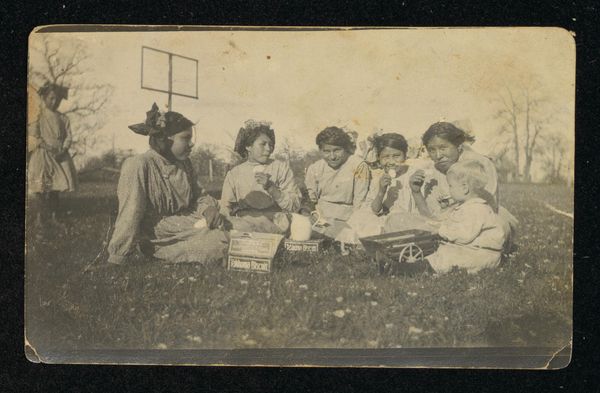
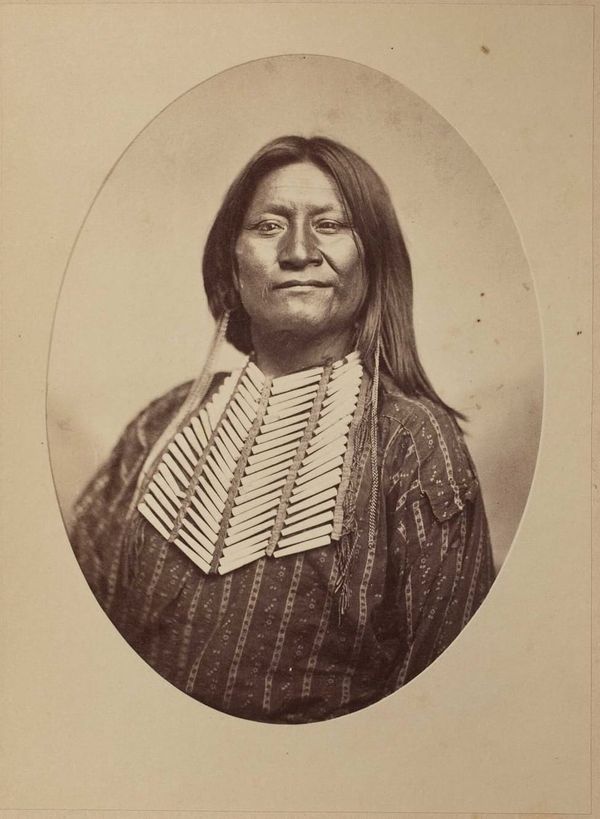
I was going to share something about what I describe as “gestural resistance,” a method of looking at photographs of Indigenous people, that is in which the subjects are Indigenous people, but the photographers are White anthropologists or journalists, in which a subtle bodily inflection, a gesture, can hold out some possibility of resisting the ethnographic impulse, and thus, the fixing of Indigenous bodies in time—as part of a historical, even pre-historical past. A gesture is a worlding mechanism. A gesture enacts the moves of the body, its contours and possibilities.
I was going to share some of that, but I just can’t right now. Instead, I’m going to think about archives and possibilities in the context of Palestine today. I have been writing about about how to look for resistance, and in some of that work I argue that a coy grin, a squirming child that blurs the image, a foot grounding itself in the earth, can be read as forms of Indigenous resistance to the ethnographic frame. But what can such an argument do in the wake of another moment of genocide? A moment that is not a moment, but an ongoing apocalypse. What can gestures mean in the context of the bombing of Palestine, and the now more than 45,000 lives that the state of Israel has extinguished. I say at one point in the book that I want to look at images that are hard to look at. But there are other images, other archives, that I am not looking at because they are much too visceral, violent, or graphic. Much too present.
But I have to try. We have to try. We owe it to the Palestinian journalists and activists and regular people, living unlivable lives in the wake of yet another apocalypse. We owe it to them.
I mean that the archive and the possibility of Palestine are one and the same. The archive stretches from the River to the Sea. It is an archive of olive trees and ocean salt. It is an archive of a people whose relationship to place is what make them who they are. It is an archive of resistance, and its gestures are in the eyes of mothers holding dead children. In blood dried beneath fingernails. In the kneading of bread. In the breath of prayer. It is an archive, and its gestures are not metaphorical, but rather the enactment of what the land requires. What the land is and can be. What the land has always been, and who the Palestinian people have always been in relation to that land.
What possible archive is this? What do we do—and who is the we?
A photograph of a man who bows his head over two bodies draped in Palestinian flags, blood smeared across the white band.
A photograph of smoke billowing from Gaza, a city in ruins, cement poles shattered, rooftops crumpled, grass charred in the foreground.
A photograph of children sweeping ash from a makeshift porch as laundry hangs from a line stretched toward a metal pole staked in a cinderblock.
A photograph of men searching for survivors.
The faces of martyrs, of women mourning, of a people suffering a genocide. And in the rubble, a hand curved beneath a pile of debris, jutting out as if waiting to be held. A hand. A gesture.
The archive stretches from the River to the Sea. And yet, can I really say that this hand buried in shards of destroyed concrete, a hand buried beneath a home in ruins, is holding out resistance? I do not know. I hope. I wonder if this is something I can say, and if I say it, does the lingering sense of doubt is better or worse.
I don’t have answers, but I do know that the very least we can do is have a chance to vote on a BDS measure at this MLA meeting. I do not know if this is possible, but in the possibilities of Palestinian resistance, we must strive to do more than gesture toward condemnation or remorse, but work toward freedom.