Upcoming talks and TBA festival
Gurl, we got things going on
I’ve been thinking a lot about what it means to have a body, to be embodied, to inhabit and conjure a form of corporeality that makes sense in spite of settler colonialism. It’s the “in spite of” that always trips me up. As if we have to navigate that resistant force, that history, in order for our bodies to exist at all. That was the topic of the conversation I had with Asher Pandjiris for their Living in This Queer Body podcast, which you can listen to here. I love that the title is “The Melancholy of…” because a lot of the time my sense of self/embodiment is a kind of what if or what could have been. I talk about my formative years in Texas, playing soccer and music growing up, and also reflect on the monkeypox situation toward the end.
More on bodies, queerness, and Indigeneity this week and next, so a couple invitations:
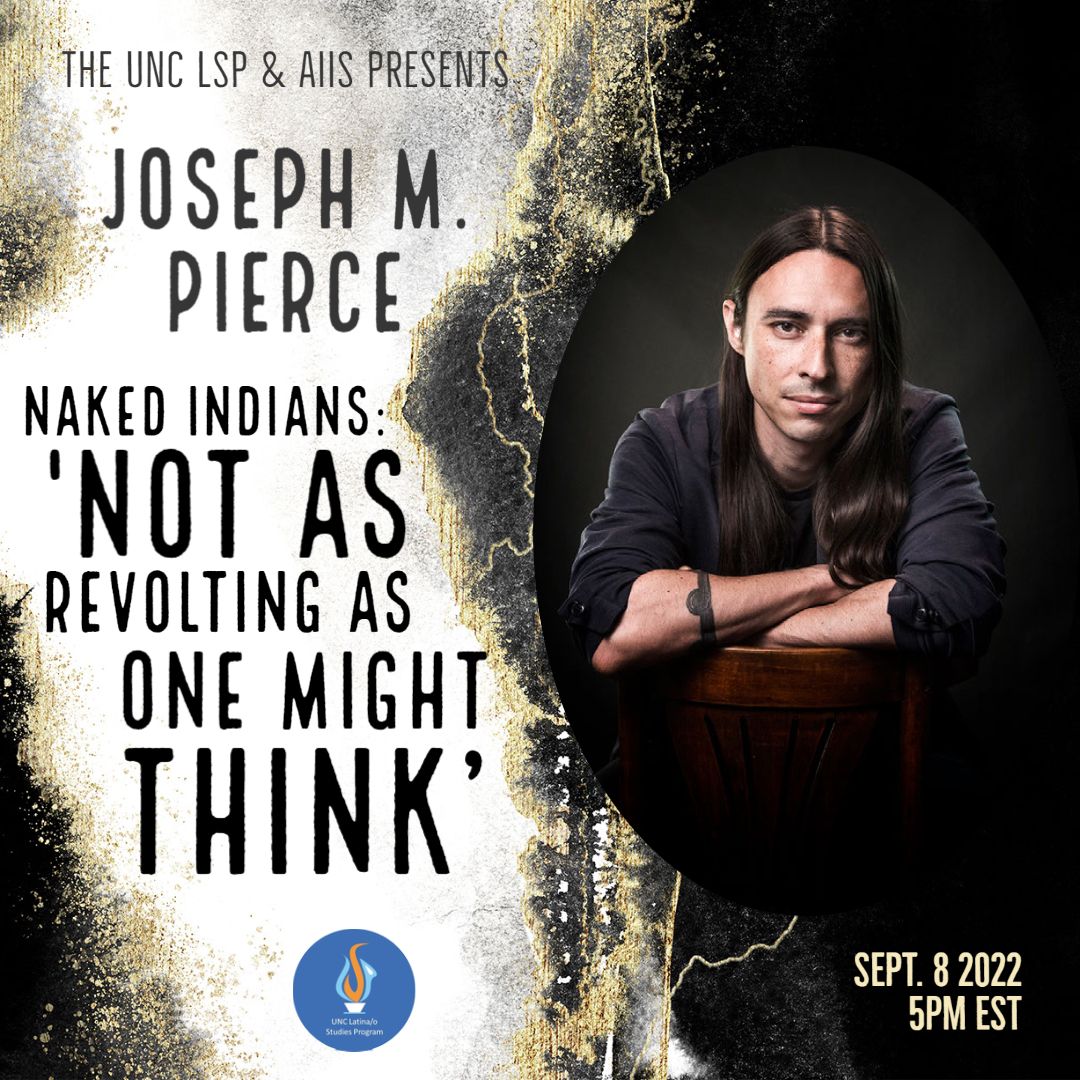
I’ll be speaking via Zoom on September 8, 2022 at 5pm EDT as part of the UNC Chapel Hill Latina/o Studies Program, co-sponsored by American Indian and Indigenous Studies. You can register here.
Title: “Naked Indians: ‘Not as Revolting as One Might Think’”
Abstract: Settlers have viewed Indigenous bodies as objects of erotic ambivalence. The Indian is naked in colonial eyes. And the nakedness of the Indian is itself a project of discovery in which the body is subjected to aesthetic and epistemological scrutiny. This scrutiny is not value neutral, and participates in the gendered dynamic by which Europeans imagined Indigenous peoples as naive and deviant, but also potentially beautiful. Amerigo Vespucci would write about the Indigenous women he observed, “they are not as revolting as one might think.” This and other depictions of indigenous bodies focus on the matter of the flesh but also how the unclothed Indian represents both an object of desire and revulsion. This presentation will discuss what the naked Indian means, and how Indigenous people have repurposed the significance of nakedness over time.
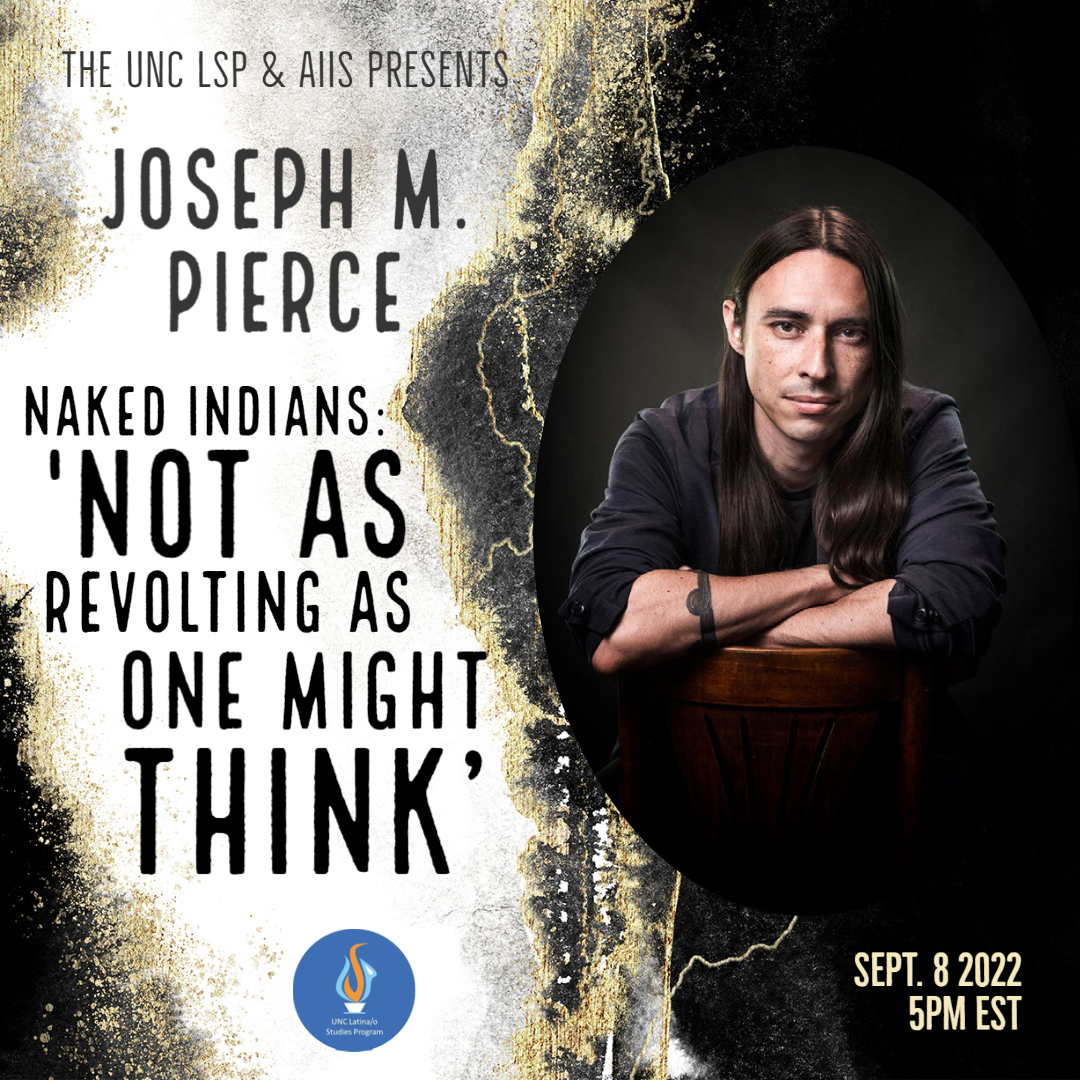
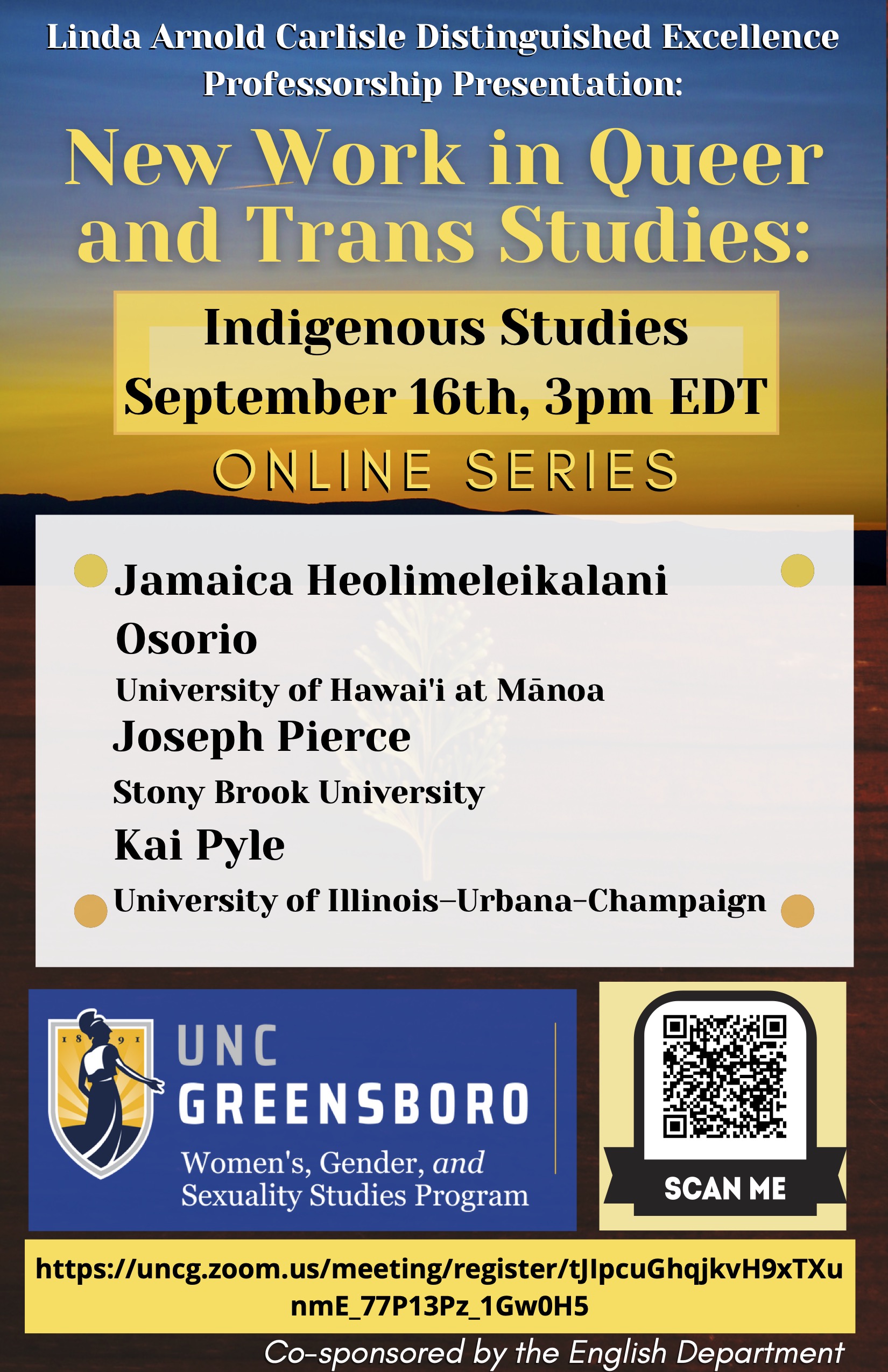
I’m also participating on the panel, “New Work in Queer and Trans Studies: Indigenous Studies” on September 16, 2022 at 3pm EDT, along with Jamaica Heolimeleikalani Osorio (University of Hawai’i at Mānoa) and Kai Pyle (University of Illinois, Urbana-Champaign). The panel is sponsored by the UNC Greensboro Women’s, Gender and Sexuality Studies Program and English Department, and presented by the Linda Arnold Carlisle Distinguished Excellence Professorship (organized by Mark Rifkin). You can register here. For my part, I’m going to talk about the relationship (or tension) between normativity and queerness in queer Indigenous studies, taking up work by Daniel Heath Justice, Jodi Byrd, Leanne Betasamosake Simpson, and Glenn Sean Coulthard. In short: queernes is only queer from the perspective of settler sexuality, so what good is it to Native bodies?
Finally, SJ Norman and I will be rebooting our co-curated series, Knowledge of Wounds at the Portland Institute for Creative Arts TBA (Time Based Arts) festival. Our lineup includes Chloe Alexandra Thompson and DB Amorin, whose collective work "They Can Never Burn the Stars,” is going to be fire fire fire, on Thursday, September 15 at 9pm PDT (in Portland), only live in person. If you’re going to be in Portland or thereabouts, and want to join, info about this collaboration is here.
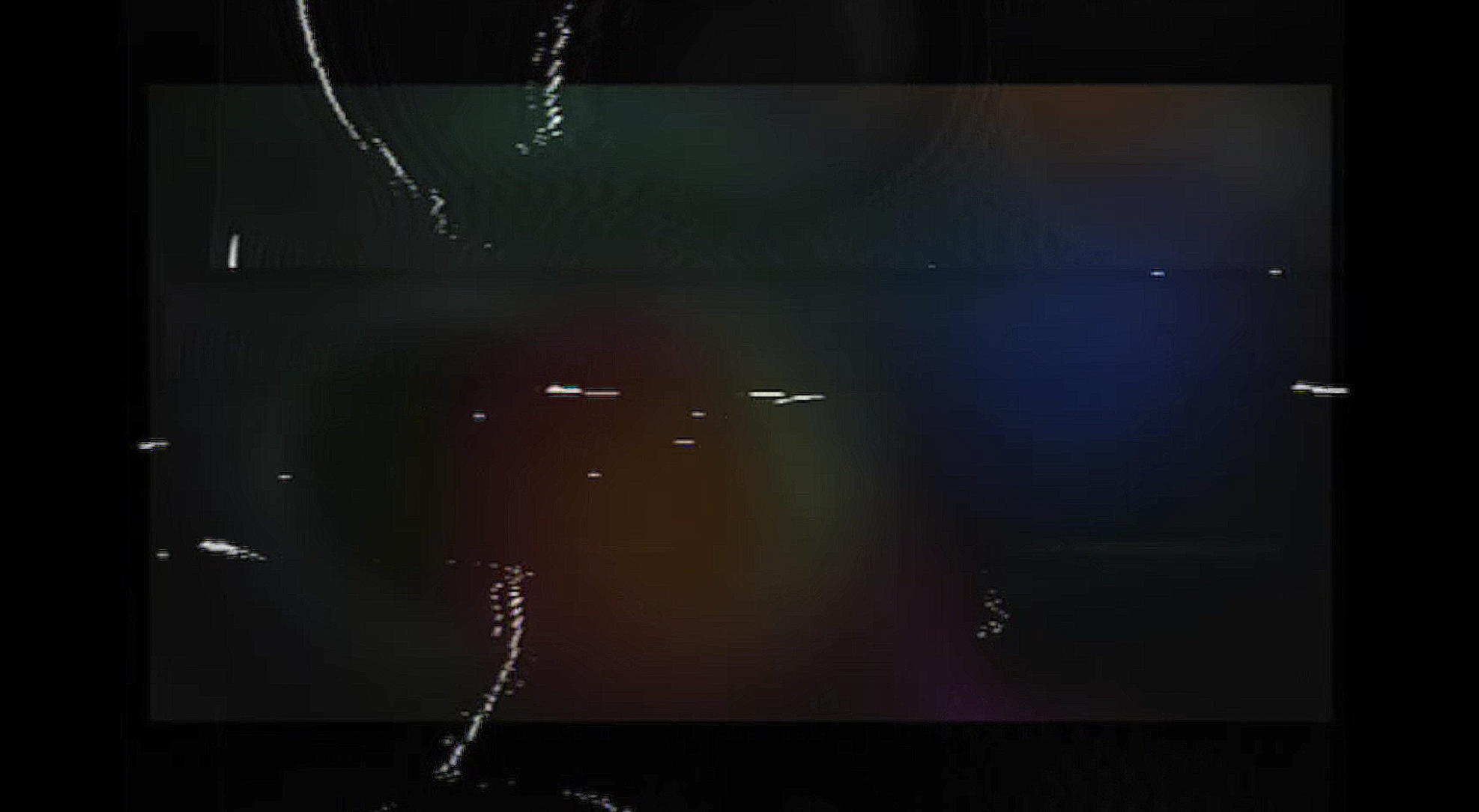
Photo credit: still from Nocturne Voice, 2022, DB Amorin
A podcast, two talks, and a festival. Gurl, we got things going on.