Writing and Waiting
On "the process"
I got a lovely notification today that has started writing a bit more on the stack, and his first post was about writing. Why write? What brings you to write?
It got me thinking. I have been waiting for the page proofs of my next book—Speculative Relations is now on the Duke website (OMG!) but it still has a ways to go until its release in late August. If you have ever worked in academia you’ll know that there are intense moments of writing—deadlines!—and then intense lulls—waiting until the page proofs come back. The process has ebbs and flows.
The majority of Speculative Relations was completed about three years ago when I submitted the first completed draft. And then about a year for peer review, then my edits and return to the press, then another review, and then back to me, then more edits, and back to the press for copyediting, then back to me, and back to the press, and that’s where we are now. Once those copyedits come in (and it should be this week!) I’ll have a few weeks to finalize things and read through one more time, and then it’s time for cover design and more waiting until August.
In the meantime, I’ve hinted at this, I have been doing research at MoMA on a few things (later I’ll say more), but I have also been working on a memoir. This memoir is supposed to be about how I became Cherokee. I have a few decent chapters. I have even sent it to a few people. But I feel stuck with it. I feel like I’m not able to make any moves there. (Partly this is because of the world, and partly the waiting for Speculative Relations to come back, but also, there is a kind of block there—an impasse).
Estes talks about feeling stuck sometimes, and how, in addition, this stuckness can lead him to feel like an impostor. What truth there! He recalls, “Whenever I feel like I'm experiencing imposter syndrome, I remember my family history—how writing helped shape our tribal history.” In a way, this is a skill I have—to remember the strength of family—but perhaps in a different way. I understand what Nick is saying. In fact, I kind of envy it. But what he describes is so different from my own experience.
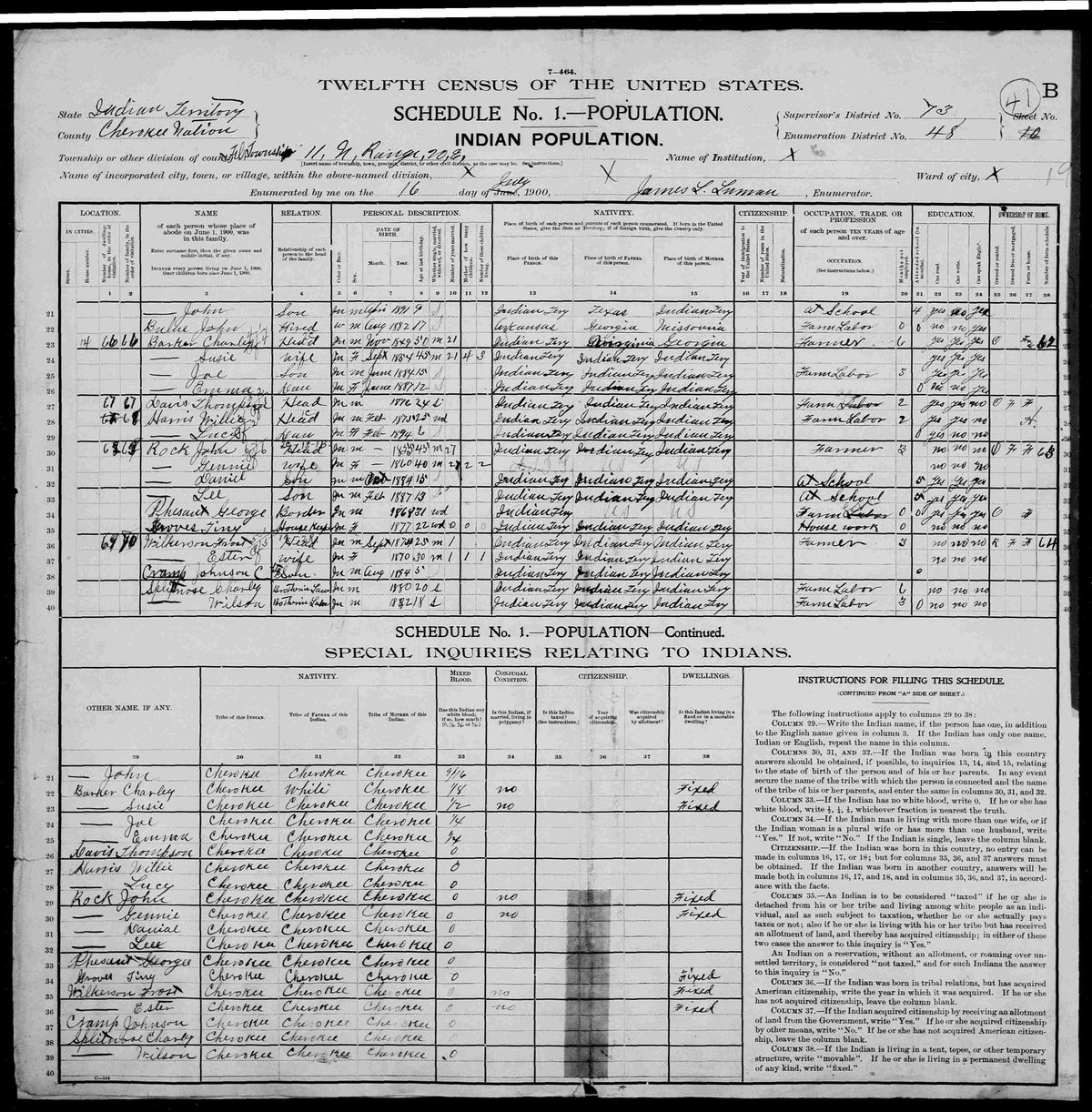
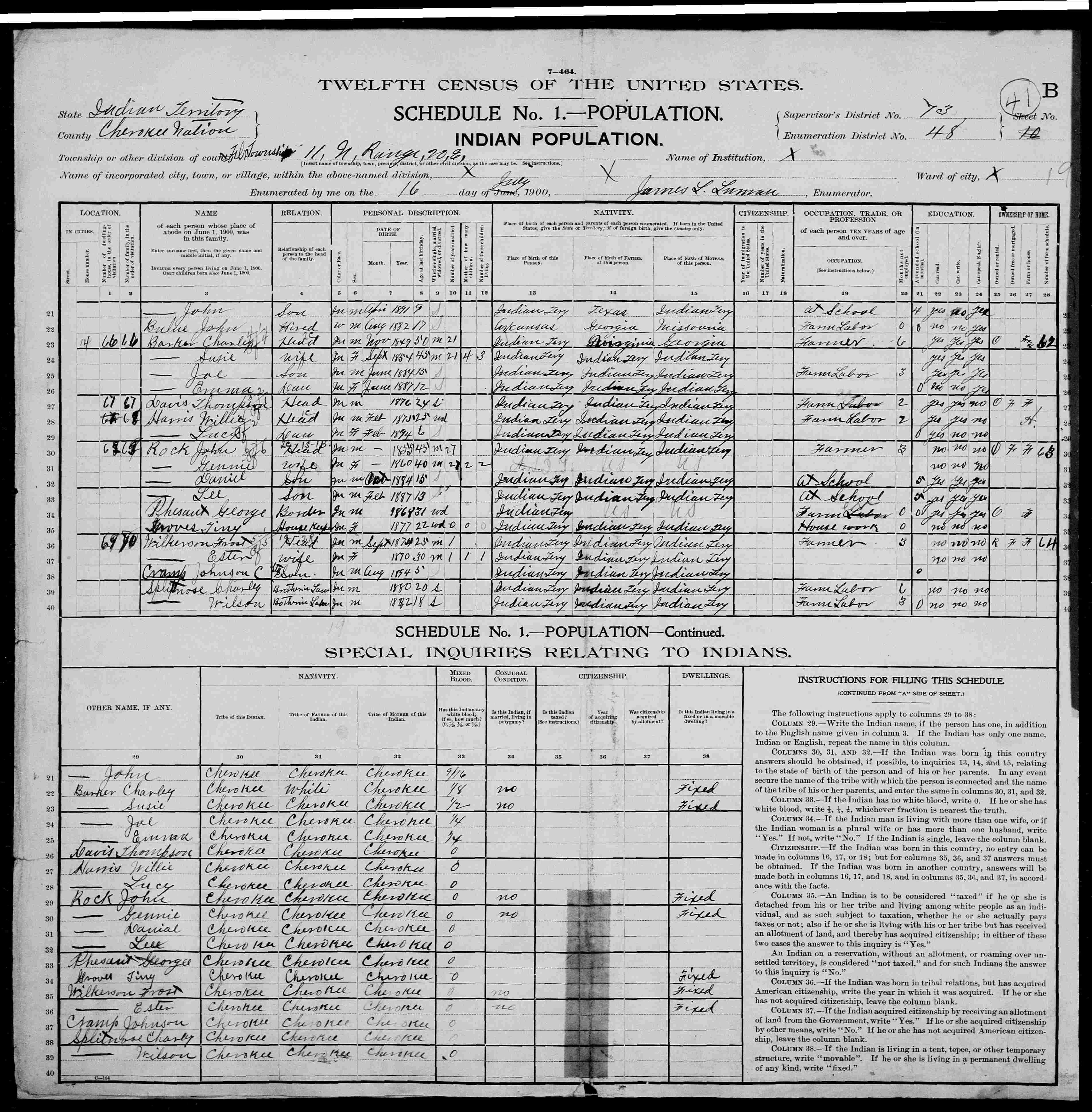
My family history is largely absent from the writing of the Cherokee Nation. There is A LOT of writing from and about the Cherokee Nation. But my ancestors did not directly shape those documents. Instead my family’s experience appears in allotment deeds, court proceedings, and census documents. Their marks are there, but not in their own hand. These are the writings of Indigenous presence, but sometimes that writing, that storying, is not one we can discover without some imagination.
Nick is not saying that the archive is the only place for such stories. Far from it. He is talking about how our stories—how listening—is a skill that allows us to be better relatives, to be in good relations with those around us. He’s saying that to be a good listener is to understand how the history of Indigenous presence is not only what is left in the documentary record. Those traces are remnants of colonial violence. Yes. But they are also possibilities.
What I have been trying to figure out is how to write a memoir that engages with these gaps in the record. These absences that are more than just nothing—these spaces that are filled with the love of kin, the love of land, the love of a people. But my own personal experience does not contain the memory of such things. I have to speculate.
I have been thinking about speculation in my academic work, as I note above, for a few years. I define it and theorize through it. But I have also been trying to put it to practice in various ways. I did that in the Alchemy lecture (and manifesto). There I tried not to think about speculation and relations, but to embody them in the writing. To enact them in the storying.
I am writing all this to say that I think I know what to do, but it just took me a while to understand that I wasn’t alone in being stuck. We all get there. We all try to force things. There is no rush with the memoir. I’m not in any real hurry to get it done—I don’t have a contract (yet? who knows?), but I do want to put out there to you all that sometimes it takes sharing the struggle to know that you are not alone in your doubts or in the lingering sense that there is something more to say. Some reason to keep pushing. And sometimes it takes another person saying what you’ve been thinking to get the clarity you need.
Writing is like that: sometimes you need to listen to what other people say to better know how to tell your own story.